How to Score Sourdough Bread
As an Amazon Associate I earn from qualifying purchases.
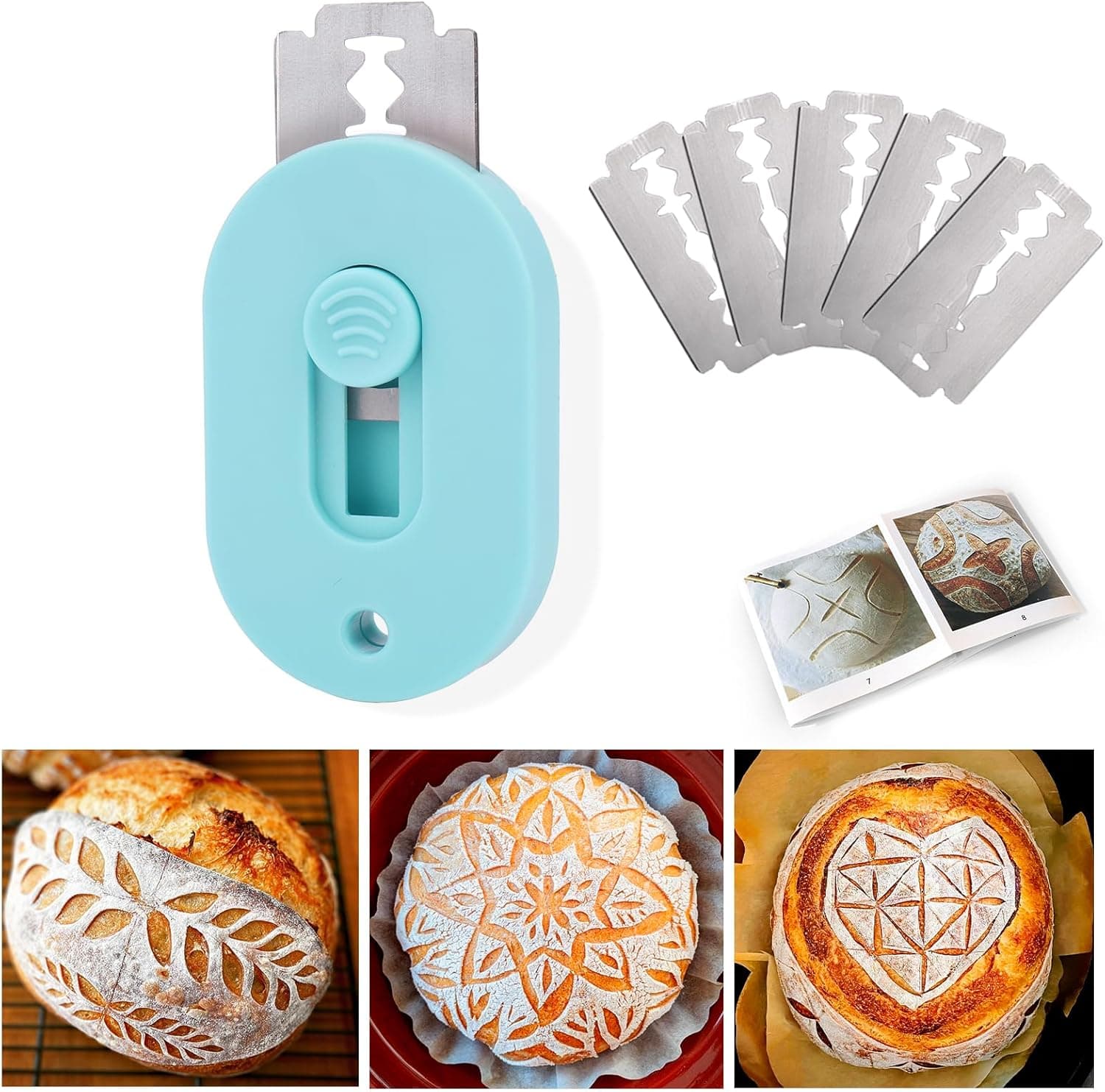
Scoring is the moment right before your loaf goes into the oven when you slash the surface of the dough with a sharp blade. It looks decorative, and it can be, but scoring serves a crucial purpose. As the loaf heats and expands, those cuts give the dough a controlled place to open up. Without a good score, a loaf will burst at random weak points, often along the sides or bottom, leaving you with a misshapen result. A confident slash tells the bread exactly where to bloom.
The best tool for scoring is a lame, which is a thin razor blade mounted on a handle. A plain razor blade or a very sharp paring knife can also work in a pinch, but a lame gives you the control and clean edges that make scoring easier. Keep your blade sharp and replace it when it starts to drag, because a dull edge tears the dough instead of slicing it. Many bakers keep a small collection of blades and swap them out regularly.
Depth and angle matter enormously. For a decorative pattern that stays shallow, hold the blade nearly straight up and down and cut about a quarter inch deep. For a dramatic ear, which is that raised flap of crust bakers love, hold the blade at a shallow angle of roughly thirty degrees and make one confident slash along the side of the loaf. The low angle creates a lip of dough that lifts and curls as the bread springs, forming that signature crown.
Committing to the cut is more important than any fancy pattern. Hesitation causes the blade to drag and the dough to snag, which ruins the line and can deflate your careful shaping. Move quickly and smoothly in a single motion. It helps to work on cold dough straight from the refrigerator, because chilled dough is firmer and holds its shape under the blade far better than a warm, slack loaf.
Beginners should start with a single long slash down the center or slightly off to one side. This one cut does the most important job of directing the expansion, and it produces a classic, handsome loaf. Once you are comfortable, you can explore patterns like a simple cross, a wheat stalk, or leaf designs. Save the intricate artwork for shallow surface cuts and keep one deeper structural score to handle the actual oven spring.
After a few bakes you will start to read your dough and understand how it responds. If your loaves keep opening unevenly, try scoring deeper or adjusting your angle. If the cuts barely open at all, your dough may be overproofed and lacking the strength to spring. Scoring is a skill built through repetition, so treat each loaf as practice. Soon the quick, decisive slash will feel completely natural, and your loaves will show it.