Challenger Bread Pan Cast Iron Loaf Pan with Lid for Artisan Sourdough Baking, Made in USA Review (2026)
Updated September 14, 2026 · Research-based review
Our verdict
The Challenger Bread Pan suits committed sourdough bakers who want an easy-load, purpose-built pan for a thick, blistered crust rather than a repurposed Dutch oven. The shallow base and tall lid make loading dough simple, but the cast iron is heavy and the price sits well above ordinary combo cookers.
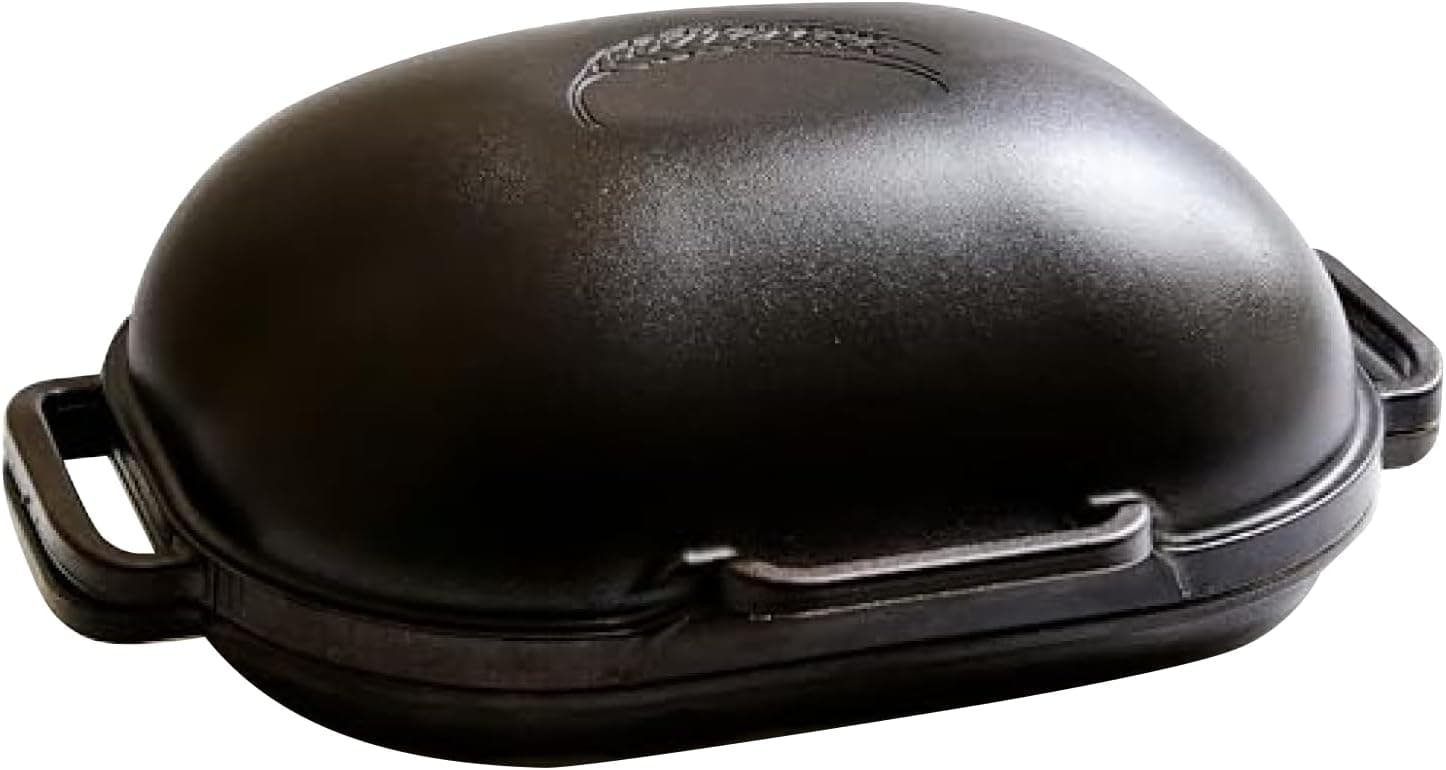
The Challenger Bread Pan, a US-made cast iron loaf pan with lid designed specifically for artisan sourdough baking.
Price range: See on Amazon
What we liked
- + Low base with a tall lid makes loading dough easy and leaves room for oven spring
- + Made in USA cast iron holds heat for a thick, crackling crust
- + Rectangular shape bakes both batards and boules without cramping
Trade-offs
- - Premium price is far above standard cast iron combo cookers
- - Heavy pan and lid are awkward to lift and store
Who the Challenger Bread Pan Fits
This is a pan built for bakers who already keep a sourdough starter alive and want a tool dedicated to open crumb, blistered loaves rather than an all purpose Dutch oven pressed into service for bread. According to the manufacturer, the cast iron base and lid measure 15.5 by 10.5 by 5.5 inches and weigh 20 pounds combined, with the lid at 11.3 pounds and the base at 8.7 pounds. That low, shallow base and comparatively tall lid are the whole point: sliding a proofed boule or batard off a peel into a shallow well is far less fiddly than lowering dough into a deep pot. The rectangular footprint also means both round boules and longer batards bake without the dough touching the sides, something a round combo cooker or Dutch oven cannot offer in quite the same way.
Cast Iron Build and Heat Handling
The pan is cast from thick iron and hand seasoned in the United States before it ships, per the manufacturer, which rates it for oven use up to 500 degrees Fahrenheit, covering the high heat most sourdough recipes call for at the start of a bake. Cast iron of this mass holds and re radiates heat steadily once the oven door opens to load dough, which is what produces the thick, crackling crust the pan is known for. There is no enamel coating to chip, so the cooking surface is the iron itself, and like any raw cast iron it needs a thin coat of oil worked in periodically rather than a dishwasher cycle. The trade off for that heat retention is mass, and at 20 pounds combined this is not a pan you casually swap in and out of a crowded oven.
Loading, Baking, and Care in Practice
Because the base and lid together weigh 20 pounds, the manufacturer recommends loading them into the oven separately rather than carrying the assembled pan, and using a wooden peel to slide dough into the hot base. If loaves brown too fast on the bottom, the maker suggests two fixes: pull the lid off partway through the bake, flip it onto the stovetop, and set the base on top of it, or drop the oven to 435 degrees Fahrenheit after the initial high heat load while still preheating to 500. Bakers also use tricks like lining the base with parchment, dusting it with semolina, or tucking an ice cube in a corner to boost steam and blistering. Cleanup follows normal cast iron rules: wipe out crumbs, skip soap that strips seasoning, dry it fully, and re oil the surface so rust does not creep in between bakes.
How It Compares With the Bundled Versions
Challenger sells this same pan bundled with extras, and it is worth knowing what you give up by buying the pan alone. The version bundled with a cast iron care kit pairs the identical casting with a bamboo brush, a chainmill scrubber, and grapeseed oil for owners who do not already keep seasoning supplies on hand. A separate bundle pairs the pan with a walnut bench knife and a dozen flour sack towels for dividing dough and lining proofing baskets. If you already own a bench knife, kitchen towels, and basic cast iron care tools, the standalone pan is the better value, since you are not paying for accessories duplicating what is already in your kitchen. Bakers starting from scratch may prefer one of those bundles instead.
Verdict and Who Should Look Elsewhere
The Challenger Bread Pan earns its reputation among dedicated sourdough bakers because the shallow base solves the real problem of loading proofed dough without deflating it, and the tall lid gives loaves room to spring before the crust sets. It is not a beginner's first bread pan, and the price and weight will not make sense for someone who bakes bread occasionally or is still learning to shape a loaf. Casual bakers, or anyone with limited strength for lifting 20 pounds of iron, are better served by a standard enameled Dutch oven or a lighter cast iron combo cooker. For someone already committed to weekly baking and chasing a bakery style crust, this is a purpose built tool that should last for decades with basic care, matching our score of 9.4 out of 10 for fit and build quality.
Frequently asked questions
Can I use the Challenger Bread Pan for round boules and long batards?
Yes. Its rectangular base fits both shapes without the dough touching the sides, unlike a round Dutch oven.
Does the Challenger Bread Pan need to be seasoned before first use?
No, the manufacturer hand seasons the pan in the United States before it ships, so it is ready to use out of the box.
How hot can the Challenger Bread Pan go?
The manufacturer rates it for oven use up to 500 degrees Fahrenheit, which covers the high heat most sourdough recipes call for.
Is the Challenger Bread Pan hard to lift in and out of the oven?
At 20 pounds combined, yes. The manufacturer recommends loading the base and lid into the oven separately rather than carrying them together.
Prices change often, so check the current price and availability on Amazon.
Check price on AmazonSourdough Gear Hub may earn a commission from the link above.