How To Make Sourdough: 45 recipes - Emmanuel Hadjiandreou Review (2026)
Updated September 20, 2026 · Research-based review
Our verdict
This 160 page hardcover from Ryland Peters & Small suits bakers who already have a working starter and want a recipe-forward guide across 45 sourdough breads, from basic loaves to rye and enriched doughs. It leans on step-by-step recipes over deep fermentation science, so bakers wanting technical depth may want a companion reference.
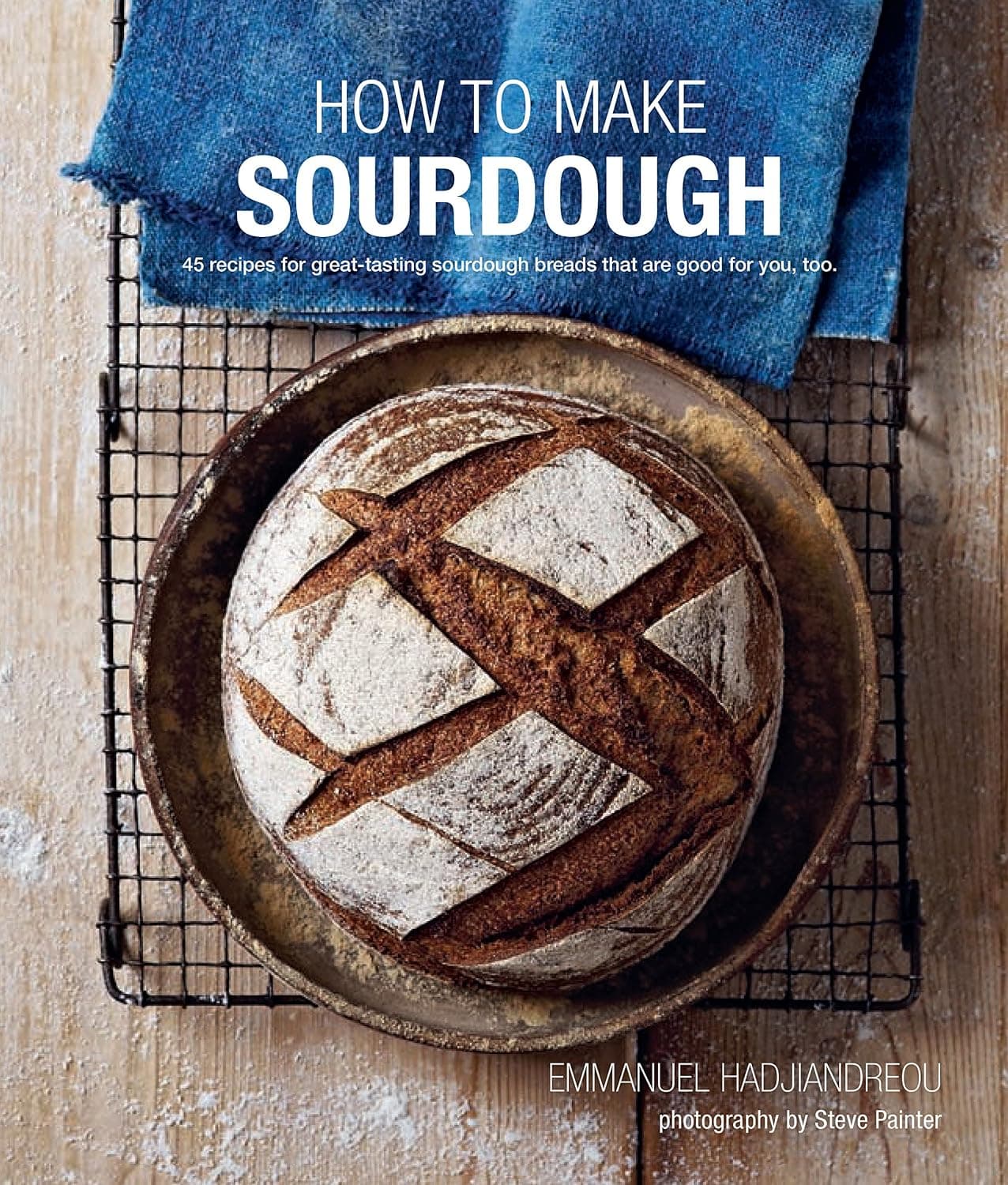
How To Make Sourdough by Emmanuel Hadjiandreou, a step-by-step book with 45 recipes for sourdough breads and bakes.
Price range: See on Amazon
What we liked
- + 45 recipes give variety beyond a single basic country loaf
- + Step-by-step structure suits bakers who like clear visual guidance
- + Covers making a starter as well as using it in finished breads
Trade-offs
- - Less focused on fermentation science than more technical sourdough books
- - Some recipes may use metric weights that need a digital scale
Who This Book Suits
Emmanuel Hadjiandreou wrote this 160 page hardcover, published by Ryland Peters & Small, as a follow-up to his earlier book How to Make Bread, and it focuses specifically on sourdough across 45 recipes. Hadjiandreou trained in a German bakery, has worked for Gordon Ramsay and Daylesford Organic, and currently teaches bread-making at the School of Artisan Food in Nottinghamshire, giving the book a working baker's perspective rather than a purely academic one. The book suits someone who already has, or is building, a sourdough starter and wants a structured set of recipes to work through, rather than a reader starting from zero on what sourdough even is. Its step-by-step format fits bakers who like visual guidance through shaping and scoring rather than long blocks of technique-only text.
Recipe Range and Structure
The book opens with a guide to making and maintaining a starter, then walks through kneading, shaping, and baking a basic sourdough loaf before branching into more specialized chapters. According to publisher and retailer descriptions, later sections cover breads made with ancient grains such as kamut, spelt, and einkorn, along with a rye chapter featuring recipes like a New-York style rye sourdough and pumpernickel. This range means a baker who works through the book progressively builds skill from a basic country loaf toward more specialized doughs, rather than jumping between unrelated recipes. The 45 recipe count gives meaningfully more variety than single-recipe sourdough books, without approaching the scope of an encyclopedic reference.
Depth of Fermentation Science
Compared to more technically dense sourdough books that spend significant space explaining hydration ratios, fermentation timing, and dough chemistry in detail, this book leans toward a recipe-and-technique format grounded in the author's professional baking and teaching background rather than a lab-style breakdown of fermentation science. That makes it approachable for a baker who wants clear instructions and trusts the author's professional experience, but it means someone chasing a deep, mechanistic understanding of why a dough behaves a certain way at each stage may want to pair it with a more science-focused reference. This is a matter of book focus rather than a flaw, since the format matches the author's teaching style across his other bread books.
Format and Practical Use
As a 160 page hardcover, the book is sized more like a focused recipe guide than a large reference volume meant to live permanently open on a counter. That makes it reasonably easy to store on a shelf and pull out for a specific recipe, though it means less room for extended technique essays compared to longer books in the category. Photography and step-by-step visual guidance are a stated feature of the book's format, which helps newer bakers follow shaping and scoring techniques that are hard to describe in text alone. Buyers working primarily in metric units may find some recipes easier to follow, since UK-published baking books commonly default to metric weights.
Where It Sits Among Sourdough Books
Against other well-known sourdough titles, this book occupies a middle position: more recipe-focused and approachable than heavily technical references, but more structured and starter-to-finished-loaf complete than a slim beginner pamphlet. Its 45 recipe range, including grain variety and rye chapters, gives it staying power for a baker who wants to keep returning to new recipes rather than mastering one loaf and moving on. The main tradeoff remains the lighter treatment of fermentation science relative to more academically minded sourdough books, which matters most to readers specifically chasing that depth rather than a working set of tested recipes from an experienced professional baker and teacher.
Frequently asked questions
How many recipes are in the book?
It contains 45 recipes covering sourdough breads and related bakes.
Who is the author?
Emmanuel Hadjiandreou, a professional baker and teacher at the School of Artisan Food, who also wrote How to Make Bread.
How long is the book?
It is a 160 page hardcover published by Ryland Peters & Small.
Does the book explain how to make a starter?
Yes, it opens with guidance on making and maintaining a sourdough starter before moving into recipes.
Prices change often, so check the current price and availability on Amazon.
Check price on AmazonSourdough Gear Hub may earn a commission from the link above.