Banneton Size Chart: What Size Basket for Your Dough Weight
Published How we research
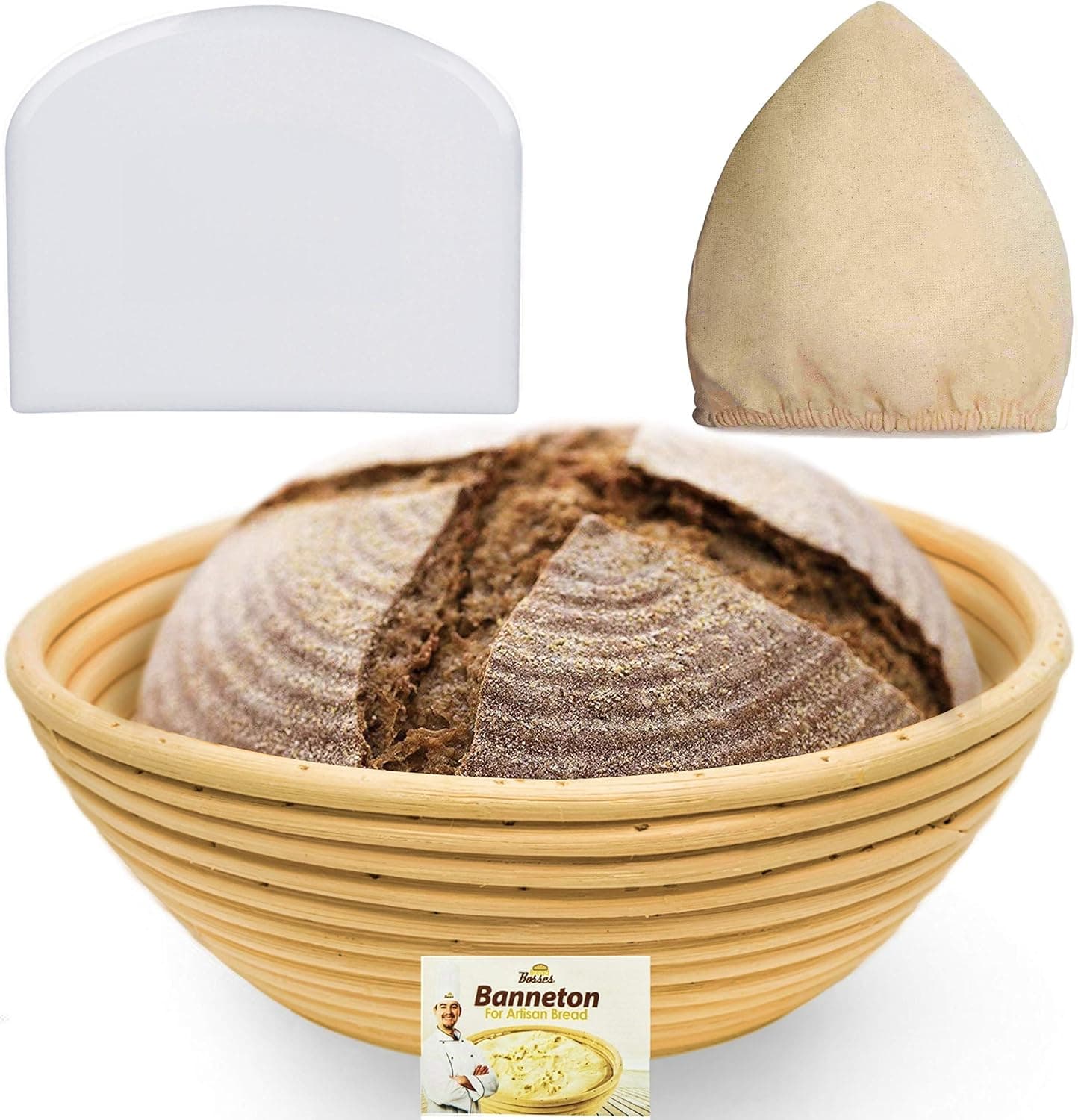
For a standard loaf made with 500 g of flour, which comes to roughly 900 g to 1 kg of dough, use a 9 inch round banneton or a 10 inch oval one. Smaller 500 g to 750 g doughs fit an 8 inch round, and anything over 1.2 kg needs a 10 inch round or a 12 inch or longer oval. The rest of this page gives the full chart by dough weight for round and oval baskets, explains how basket sizes are measured, and shows how to check the result against the pot you bake in.
Banneton size chart by dough weight
Basket size follows total dough weight, not flour weight. Add up flour, water, starter and salt to get it. A recipe with 500 g flour, 375 g water, 100 g starter and 10 g salt makes 985 g of dough, and that number is the one you match against the chart below.
Round bannetons. 7 inch (18 cm): 250 g to 500 g of dough, a small loaf for one or two people. 8 inch (20 cm): 500 g to 750 g. 9 inch (23 cm): 750 g to 1 kg, the size most home recipes assume. 10 inch (25 cm): 1 kg to 1.5 kg, a large family loaf.
Oval bannetons. 8 inch (20 cm) long: 400 g to 600 g. 10 inch (25 cm): 750 g to 1 kg, the oval equivalent of the 9 inch round. 12 inch (30 cm): 1 kg to 1.3 kg. 14 inch (35 cm): 1.3 kg to 1.5 kg and up, which is longer than many home Dutch ovens can take.
These are the ranges sellers and bakers commonly work with, and there is overlap on purpose. If your dough weight sits at the top of a range and you bake wet dough above about 78 percent hydration, stay in that snug size. If you bake stiffer or whole grain dough that rises less in the basket, either neighboring size will do.
How banneton sizes are measured
The inch size in a listing is the outside measurement across the top rim. The coiled rattan is close to a centimeter thick and the basket narrows toward the base, so the usable inside is smaller than the label: a 9 inch round has an inside opening nearer to 8 inches. Depth on standard baskets runs about 3 to 3.5 inches. Oval listings give outside length first, then width and depth, for example 10 x 6 x 3 inches.
The right fill level is the practical test. Freshly shaped dough should fill the basket about half to two thirds of the way up. By the end of the proof it should have risen to near the rim without doming far above it. Dough that starts near the rim is in a basket one size too small. Dough that only covers the bottom rings is in a basket that is too big.
Boule or batard: same dough weight, different basket
The terms get mixed up, so here is the short version. A banneton is the basket. A boule is a round loaf and a batard is an oval loaf, shaped like a short, fat torpedo. A round banneton makes a boule and an oval banneton makes a batard. Brotform is the German name for the same kind of basket. So the choice is never banneton or boule, it is which loaf shape you want, and then which basket size holds your dough in that shape.
The same dough moves between shapes by going up in length: a dough that fits a 9 inch round fits a 10 inch oval, and a dough for a 10 inch round fits a 12 to 14 inch oval. If you are buying a first basket for a roughly 1 kg dough, the 9 inch round is the safer pick because the loaf fits every common round pot. An oval earns its place when you want even slices for sandwiches or you bake in an oval pot or a long covered baker.
Match the basket to your Dutch oven
The loaf has to fit the pot with a little room around it for steam and for your hands. Measure the inside of your Dutch oven at the base, not the top rim, because most pots narrow toward the bottom. The loaf that comes out of a banneton is slightly smaller than the basket label, since the label is the outside rim.
A loaf from an 8 or 9 inch round basket fits a round Dutch oven of 5 to 6 quarts. A loaf from a 10 inch round basket wants 7 quarts or more. A batard from a 10 inch oval basket fits a round pot only if the inside is about 10 inches across or more, and it will be close, so check your measurement first. Ovals of 12 inches and longer belong in an oval Dutch oven, on a baking stone or steel, or in a long covered baker.
If you bake on a stone or steel with steam instead of a pot, basket length is limited only by the stone, and the fit question disappears.
What goes wrong with the wrong size
Too large a basket is the more common mistake. The dough spreads sideways to fill the space instead of rising up, so it comes out wide and low and bakes into a flatter loaf. The spiral ring pattern also only prints on the part of the dough that touches the coils, so a small dough in a big basket gets rings on the bottom and nothing on the sides.
Too small a basket lets the dough rise above the rim. The top then spreads over the edge, sticks to whatever covers it, and loses its shape when you turn it out. A cramped proof also makes it hard to judge readiness, because the dough has nowhere to expand.
If your only basket is a little too big for the batch, a cloth liner dusted with rice flour takes up a small amount of room and reduces sticking, but it does not turn a 10 inch basket into an 8 inch one. A towel-lined bowl of the right width supports a small dough better than an oversized basket does.
Half batches, double batches and baguettes
Two loaves from one batch: divide the dough by weight and size a basket for each half, not for the total. A 1 kg dough split in two gives 500 g pieces that fit a pair of 7 or 8 inch rounds. A 2 kg double batch split in two is back to the standard 9 inch round or 10 inch oval for each loaf. Buying two baskets of the same size keeps proofing and baking times identical for both loaves.
Scaling one recipe up or down: recalculate the dough weight and read the chart again. Cutting a 500 g flour recipe to 350 g of flour gives about 690 g of dough, which drops you from the 9 inch round to the 8 inch. Going up to 700 g of flour gives close to 1.4 kg, which needs the 10 inch round or a 14 inch oval and a larger pot to match.
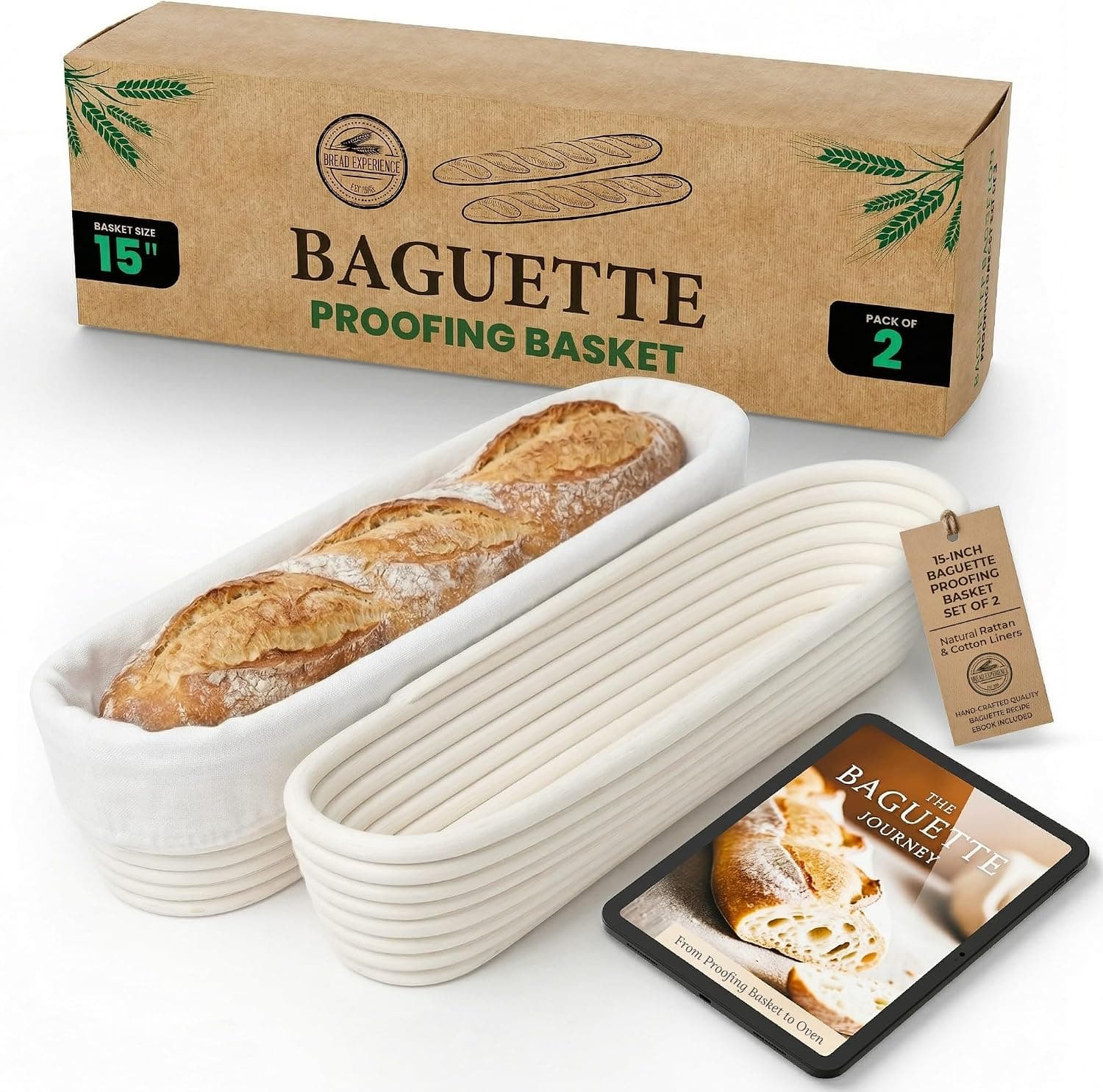
Baguettes and other long loaves use narrow baguette baskets or a linen couche instead of a standard oval. Baguette baskets are commonly sold in lengths around 15 to 17 inches, and the limit is your oven: measure the stone, steel or sheet pan you bake on and choose a length that leaves a little room at each end.
Frequently asked questions
What size banneton do I need for 500 g of flour? A 500 g flour recipe makes about 900 g to 1 kg of dough once water, starter and salt are added. That fits a 9 inch round or a 10 inch oval banneton.
Can I proof a small loaf in a large banneton? You can, but the dough will spread and bake flatter. For a dough under 600 g in a 9 or 10 inch basket, expect a wider, lower loaf. A towel-lined bowl of the right width gives better support than an oversized basket.
Is an 8 inch or 9 inch banneton better for a beginner? Go by your recipe. Most beginner recipes use 450 g to 500 g of flour, which calls for the 9 inch round. Pick the 8 inch only if you bake smaller loaves of 500 g to 750 g of dough.
Do banneton sizes include the liner? No. The listed size is the bare basket measured across the outside rim. A fitted cloth liner is thin and does not change which size you need.
Products from this article
The highest-scoring picks from the buying guides mentioned above. Scores are our editorial assessment, not customer ratings.
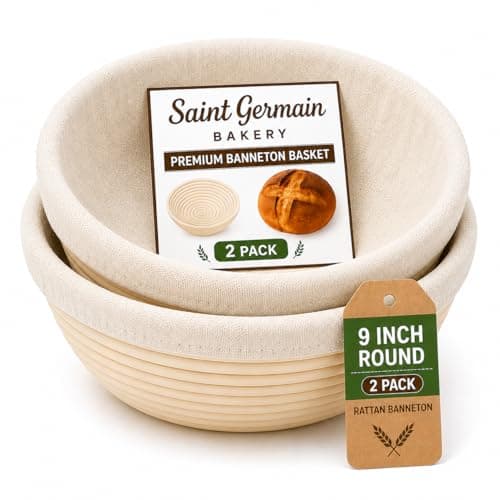
+ Two 9 inch round baskets at a low price for the pair, enough to proof a double batch.
From our guide: Best Round Proofing Baskets
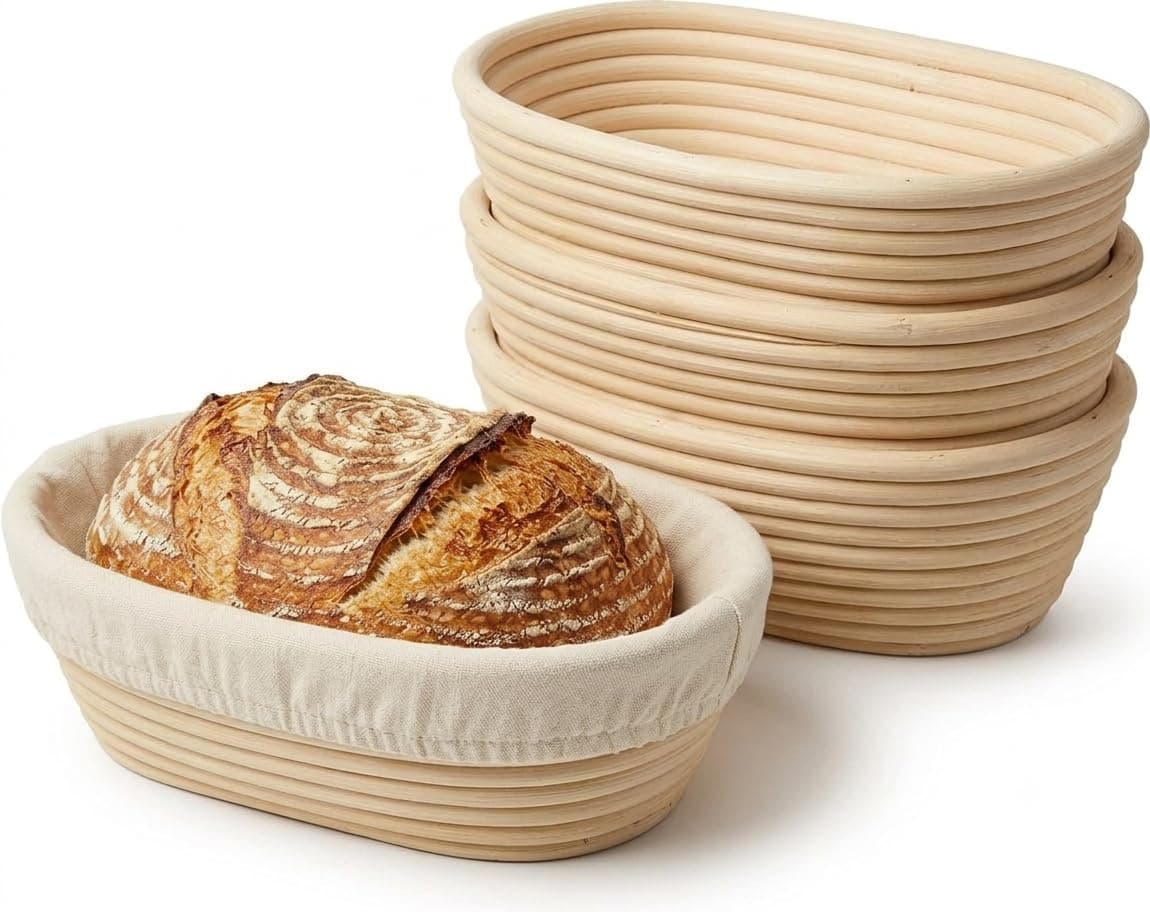
+ 4 Pack lets you proof several batards at once for big bake days
From our guide: Best Oval Proofing Baskets
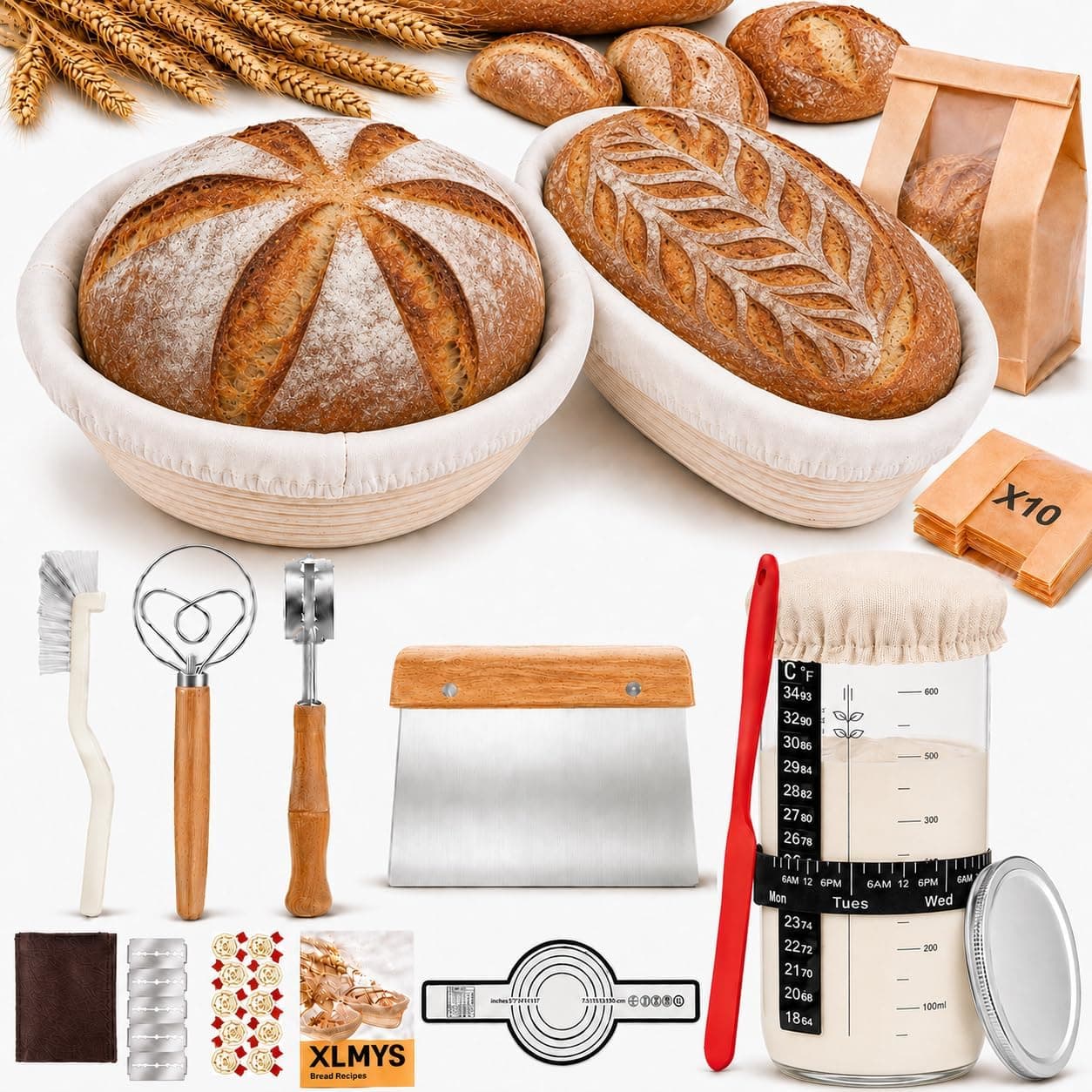
+ Starter jar is included, so beginners can build a culture and bake with one kit
From our guide: Best Bannetons
+ Handcrafted rattan wicks moisture for a firmer baguette skin
From our guide: Best Baguette Baskets
Popular right now
- Banneton vs Bowl ProofingArticle
- Best Baking Stones for BreadBuying guide
- Sourdough Baking ScheduleArticle
- Best Dough ScrapersBuying guide
- How to Stop Sourdough Dough Sticking to the Proofing BasketArticle
- Why Your Sourdough Dough Is Too Sticky to ShapeArticle
Based on the last 28 days of search and visitor data.