How to Get Better Oven Spring in Sourdough
Published How we research
Great oven spring needs a dough with life left in it (not under- or over-fermented), plenty of early steam (a preheated covered Dutch oven works best) so the crust stays pliable while it expands, and a screaming hot oven (230-250C) preheated 30-45 minutes. Confident shaping with taut surface tension holds gas so it pushes up rather than sideways, and a decisive score directs the release. Baking cold dough straight from a fridge proof is a professional trick that helps. Oven spring is the exciting final rise a loaf experiences in the first ten to fifteen minutes of baking, when trapped gases expand, moisture flashes to steam, and the yeast makes one last burst of activity before the heat kills it. A loaf with great oven spring leaps upward, tears open at the score, and develops that dramatic domed profile and open crumb bakers chase. Poor oven spring leaves you with a flat, tight loaf, and almost always the cause is one of a handful of fixable factors.
Products from this article
The highest-scoring picks from the buying guides this article links to. Scores are our editorial assessment, not customer ratings.
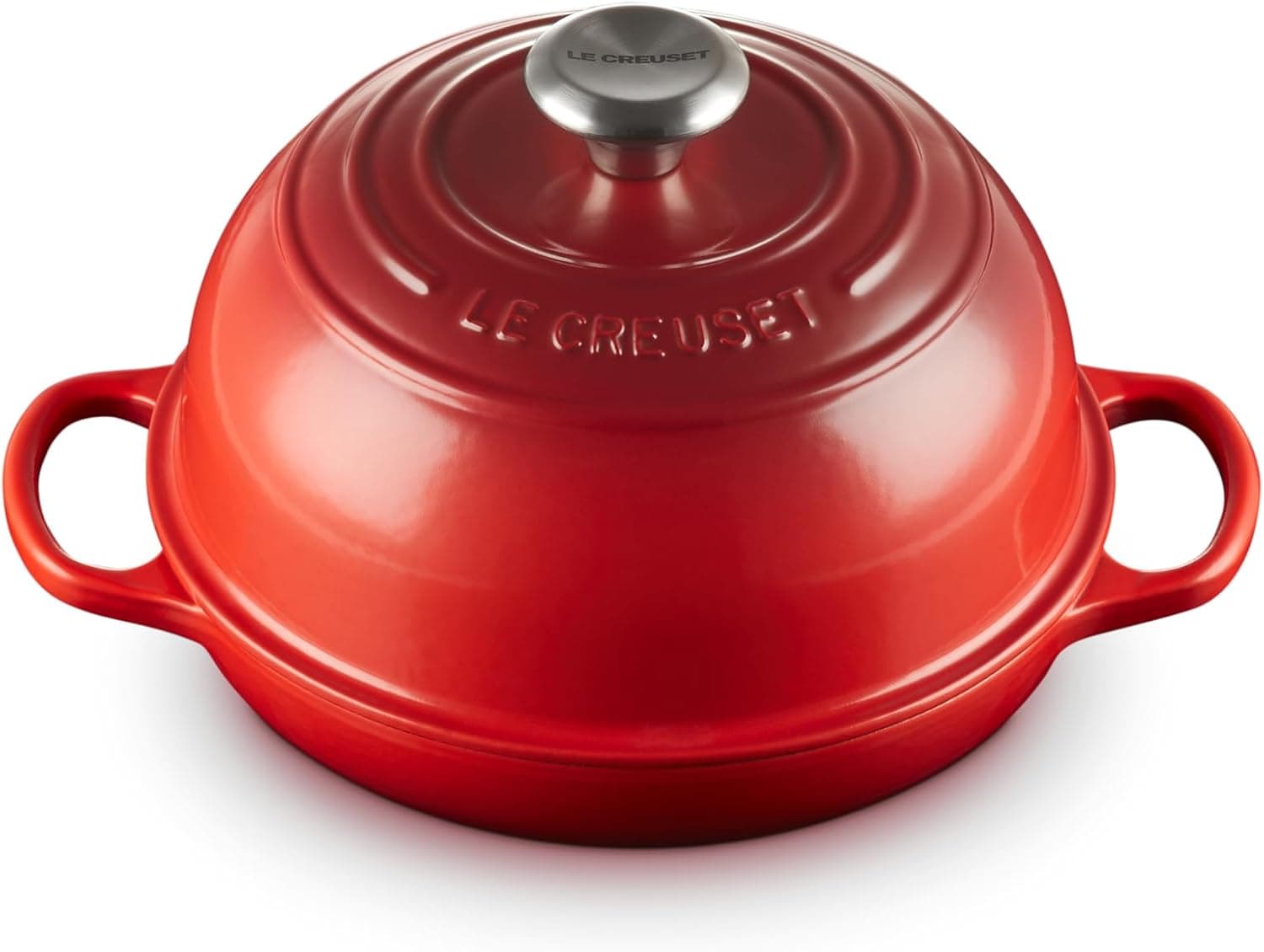
+ Skillet serves as the base and the deep pot as the lid, so scored dough is easy to load
From our guide: Best Dutch Ovens for Bread
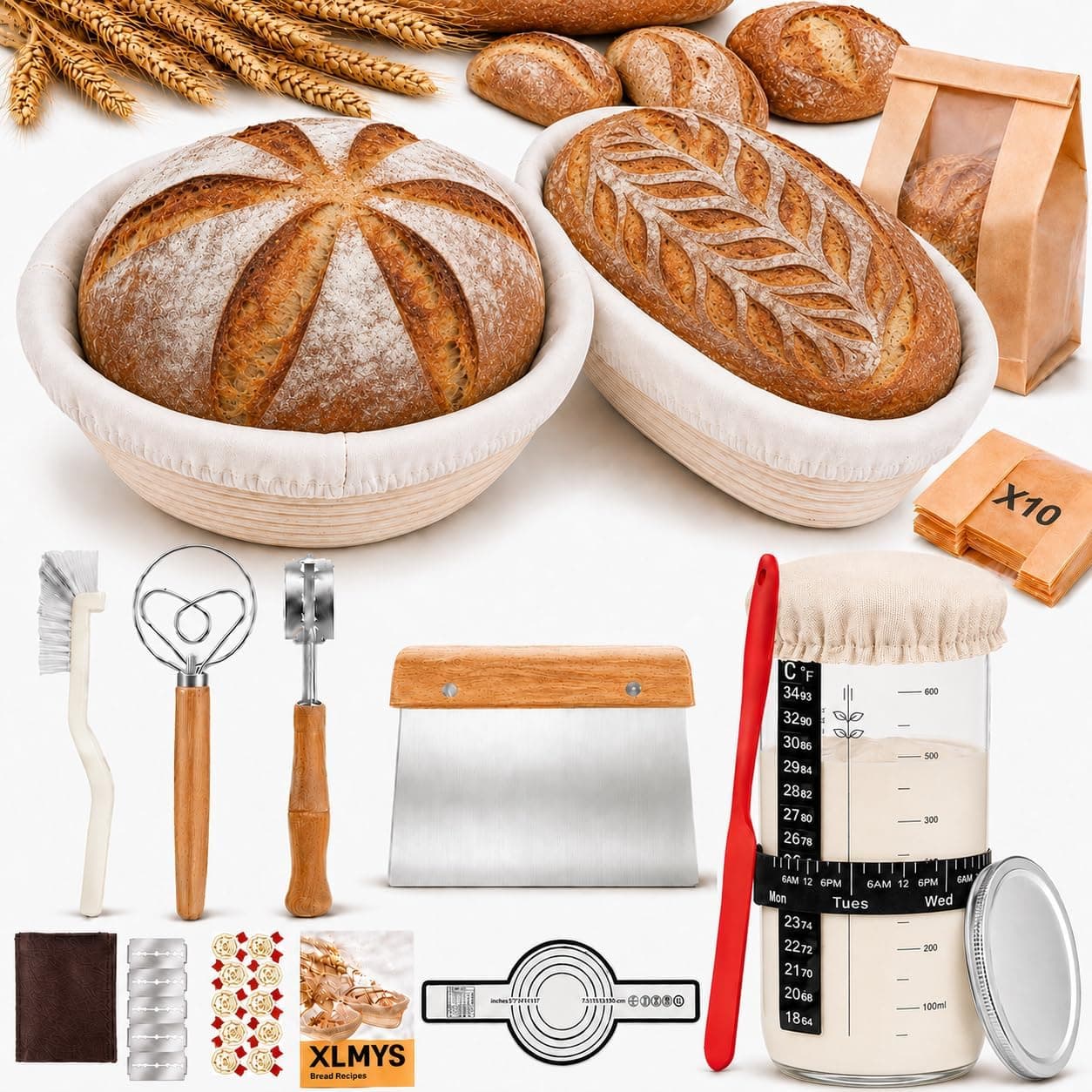
+ Starter jar is included, so beginners can build a culture and bake with one kit
From our guide: Best Sourdough Starter Kits
+ Two sizes, 5.9 and 3.9 Inch, fit both full boules and small rolls
From our guide: Best Sourdough Scoring Templates
+ Proven LCC3 design is a favorite for boules because the shallow half makes loading easy
From our guide: Best Dutch Ovens for Bread



Fermentation: the factor beginners most often get wrong
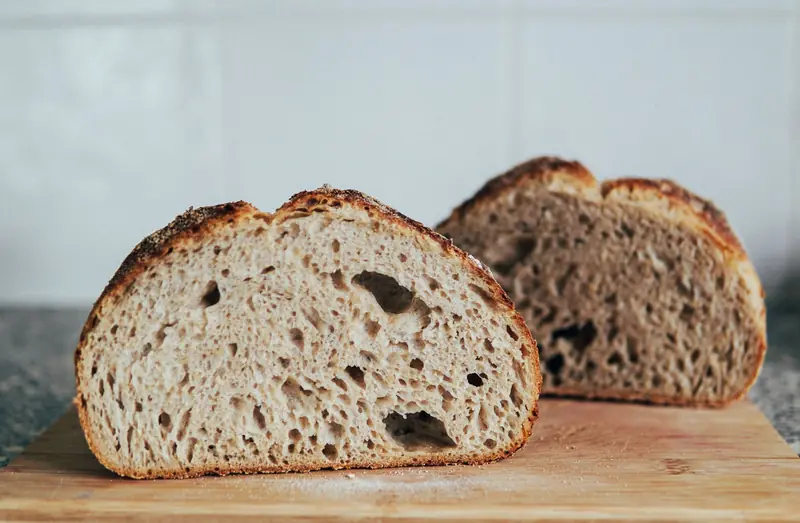
The first factor is fermentation, and it is the one beginners most often get wrong. A dough that is under-fermented has not built enough gas or extensibility to expand well, while an over-fermented dough has exhausted its yeast and weakened its gluten so much that it collapses rather than rises. Aim to bake a dough that still has spring and life in it, judged by a moderate rise during bulk and a proof that leaves the dough puffy but not slack. Getting fermentation into that sweet spot does more for oven spring than any single technique.
Steam is the second essential ingredient
Steam is the second essential ingredient. In the early minutes of baking, a moist environment keeps the surface of the loaf soft and pliable so it can continue expanding before the crust sets. Without steam the crust hardens too quickly and physically restrains the rise. The easiest way to create steam at home is to bake inside a preheated Dutch oven with the lid on, which traps the loaf's own moisture. Alternatively you can add a tray of hot water or ice cubes to a conventional oven, though a covered vessel is far more reliable.
Heat matters as much as steam
Heat matters as much as steam. A properly preheated oven, and ideally a preheated baking vessel or stone, delivers the sudden blast of high temperature that drives rapid expansion. Most sourdough bakes best when it starts hot, around 230 to 250 degrees Celsius, so preheat for a full 30 to 45 minutes before the loaf goes in. Loading dough into an under-heated oven gives a sluggish, gradual rise instead of a sharp spring, so resist the temptation to rush the preheat.
Shaping and scoring direct the spring
Shaping and scoring work together to direct the spring you have built. A well-shaped loaf with taut surface tension holds its gases and pushes upward, while a slack, poorly shaped loaf lets them escape sideways. A confident, properly angled score then gives that upward pressure a clean place to release, producing an ear and a controlled bloom. If your loaves keep bursting at the base or sides, weak shaping tension or a too-shallow score is usually the reason.
Dough temperature and putting it all together
Finally, temperature of the dough itself plays a role. Baking cold dough straight from an overnight fridge proof is a common professional trick, because the firm surface scores cleanly and the cold interior gives the yeast a slightly longer window of activity before the heat shuts it down. Put these factors together, good fermentation, plenty of early steam, a screaming hot oven, tight shaping, and a decisive score, and dramatic oven spring stops being luck and becomes something you can produce on demand.
Frequently asked questions
Why doesn't my sourdough loaf spring up in the oven? Usually one of: under- or over-fermented dough, not enough steam in the first minutes, an oven that was not hot enough, or weak shaping tension that lets gas escape sideways instead of up.
How do I create steam for baking sourdough? Bake inside a preheated Dutch oven with the lid on, which traps the loaf's own moisture. A tray of hot water or ice cubes works in a conventional oven but is less reliable.
What oven temperature is best for sourdough oven spring? Around 230 to 250 degrees Celsius, preheated for a full 30 to 45 minutes so the loaf gets a sudden blast of high heat that drives rapid expansion.
Does baking cold dough help oven spring? Yes, it is a professional trick: cold dough straight from an overnight fridge proof scores more cleanly and gives the yeast a slightly longer window of activity before the heat shuts it down.
Popular right now
- Banneton vs Bowl ProofingArticle
- Best Baking Stones for BreadBuying guide
- The 6 Best Silicone Baking Mats for Bread and Sourdough (2026)Buying guide
- Why Your Sourdough Dough Is Too Sticky to ShapeArticle
- The 7 Best Flour Storage Containers for Home Bakers (2026)Buying guide
- Best Sourdough Starter JarsBuying guide
Based on the last 28 days of search and visitor data.