The Sourdough Poke Test: How to Do It and Read the Result
Published How we research
To do the poke test, flour a finger, press it about half an inch (1 cm) into the shaped dough, pull it out and watch the dent. If the dent fills back slowly and stays partly visible, the loaf is proofed and ready to bake. A dent that springs back at once means the dough needs more time, and a dent that does not move at all means it has gone too far. The test is quick, but it only works on dough at room temperature and it misleads on cold, very wet or rye-heavy dough, so it helps to know when to trust it and what to check alongside it.
How to do the poke test step by step
Use the test during the final proof, after shaping, when the loaf is resting in its banneton or lined bowl. Dust one fingertip with flour, or wet it if the dough is very sticky, so it does not pull the surface when you take it away.
Press straight down about half an inch, to roughly the first knuckle, with gentle steady pressure. Do not jab. Remove the finger and watch the dent for three to five seconds. Poke near the edge of the loaf rather than dead center: in a basket the dough sits seam side up, so the mark ends up on the bottom of the baked loaf and will not show.
One poke tells you little if you have nothing to compare it with. Test once soon after shaping, when the dough is certainly underproofed, so you learn what a fast rebound feels like with that dough. Then test again every 15 to 20 minutes as the proof goes on and notice how the rebound slows down.
Reading the three results
Springs back quickly and completely: underproofed. The gluten is still tight and the dough has not filled with enough gas. Baked now, the loaf tends to burst unevenly at the score, with a dense crumb broken by a few large tunnels. Give it more time and test again.
Springs back slowly and leaves a shallow dent: ready. The dough is holding gas but still has strength in reserve for oven spring. This is the window to preheat for, so start heating the oven and Dutch oven before the dough reaches this point, not after. A hot pot takes 30 to 45 minutes to preheat.
Does not spring back, or the surface sags around your finger: overproofed. The structure has weakened and cannot push back. The loaf will still be edible, but expect it to spread when turned out, take a score poorly and bake flatter with a more sour taste.
When the result sits between the first two, lean toward baking. A loaf baked slightly early still has energy to rise in the oven, while one baked late has none left.
When the poke test does not work
Cold dough is the main exception. Dough that spent the night in the refrigerator is stiff, so a dent stays put or creeps back very slowly whatever the state of the proof. For a cold retard, judge the dough before it goes into the fridge, then bake it straight from cold on your usual schedule. If your cold-proofed loaves come out underproofed, lengthen the room temperature rest before refrigerating rather than relying on a poke the next morning.
Very wet dough, above roughly 80 percent hydration, is slack and sticky enough that the dent behaves sluggishly even when underproofed. Dough with a large share of rye has little gluten to spring back at all, so bakers read rye by the small cracks and pinholes that open in its floured surface instead.
The test is also meant for the final proof only. During bulk fermentation, go by volume and appearance: a rise of roughly 50 to 75 percent, a domed surface, bubbles visible at the edges and a dough that jiggles when the container is shaken. A straight-sided container with volume marks makes that rise easy to read.
Cues to use alongside the poke
Look at size first. A proofed loaf has visibly expanded in the basket, usually rising to near the rim if the basket matches the dough weight, and it looks puffy rather than tight. Shake the basket gently: ready dough wobbles a little, while underproofed dough sits firm.
Temperature explains most of the variation in timing. A dough held at 75 to 80 F proofs far faster than one in a 65 F kitchen, where the same stage can take twice as long. Checking dough temperature with a probe thermometer after mixing tells you which end of a recipe's time range to expect, and a proofing box removes the guesswork by holding the temperature steady.
Keep notes for a few bakes: dough temperature, time from shaping to baking, and what the poke looked like. After three or four loaves from the same recipe, the notes and the poke together are more reliable than either one alone.
What to do if the dough is overproofed
Bake it right away. Have the oven hot, turn the loaf out gently and score it with one shallow cut instead of a deep one, since a deep score lets a weak loaf spread further. It will bake flatter than usual but will still taste good, and it works well for toast.
If the dough has collapsed badly and no longer holds a shape, move it to a greased loaf pan so the sides support it, or press it out on an oiled sheet pan and bake it as focaccia or flatbread. Reshaping and proofing a second time is a common rescue for yeasted dough, but sourdough that is this far along has usually used up too much of its strength for that to work well.
For the next bake, shorten the final proof, lower the dough temperature, or move the loaf into the refrigerator sooner. Overproofing in the final stage often starts with a bulk fermentation that ran too long, so check that step as well.
Frequently asked questions
How long should the dent take to spring back? In a properly proofed loaf the dent fills in slowly over a few seconds and stops short, leaving a shallow mark. If it is gone within a second, the dough is underproofed. If nothing has moved after several seconds, it is overproofed.
Does the poke test work on dough straight from the fridge? Not reliably. Cold dough is firm and holds a dent regardless of how proofed it is. Judge the proof before refrigerating and bake cold-retarded loaves directly from the fridge.
Can I use the poke test during bulk fermentation? It is not designed for that stage. Use the percentage rise, surface bubbles, a domed top and a jiggle instead, and save the poke for the shaped loaf.
Does poking the dough damage the loaf? No. A gentle half-inch press on a floured spot leaves a small mark that disappears in the oven, and in a banneton it lands on what becomes the bottom of the loaf.
Products from this article
The highest-scoring picks from the buying guides mentioned above. Scores are our editorial assessment, not customer ratings.
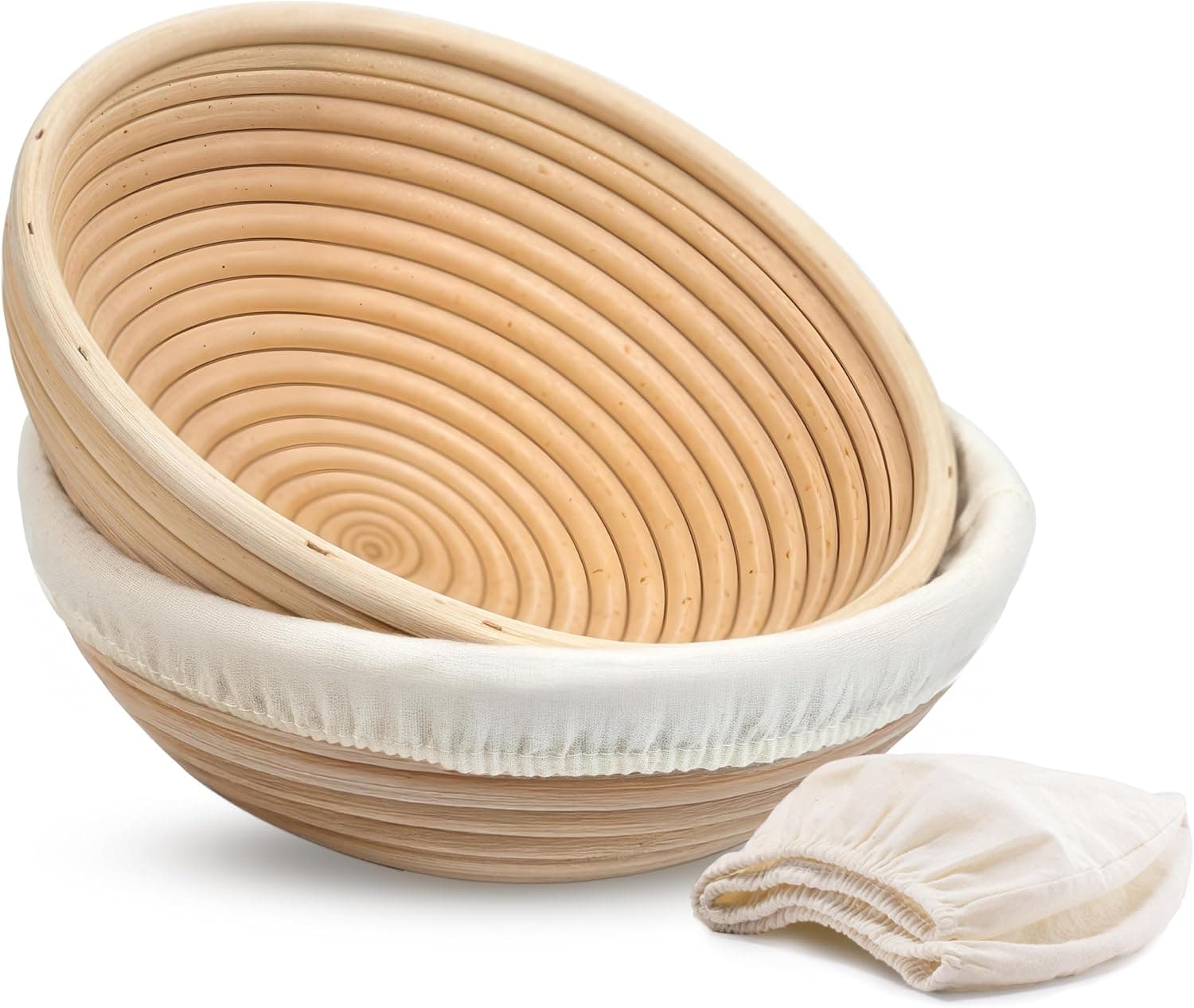
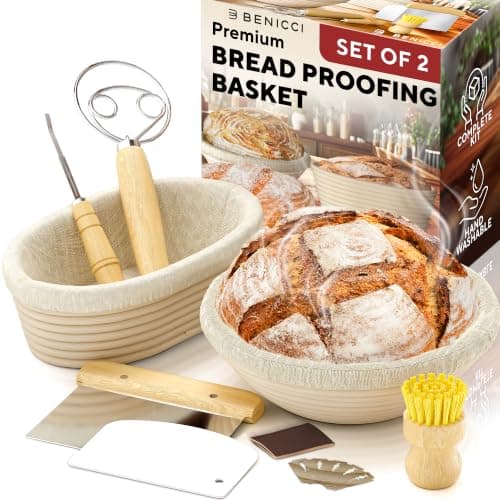
+ Round 9 inch and oval 10 inch baskets in one box, so you can proof a boule and a batard side by side.
From our guide: Best Proofing Baskets
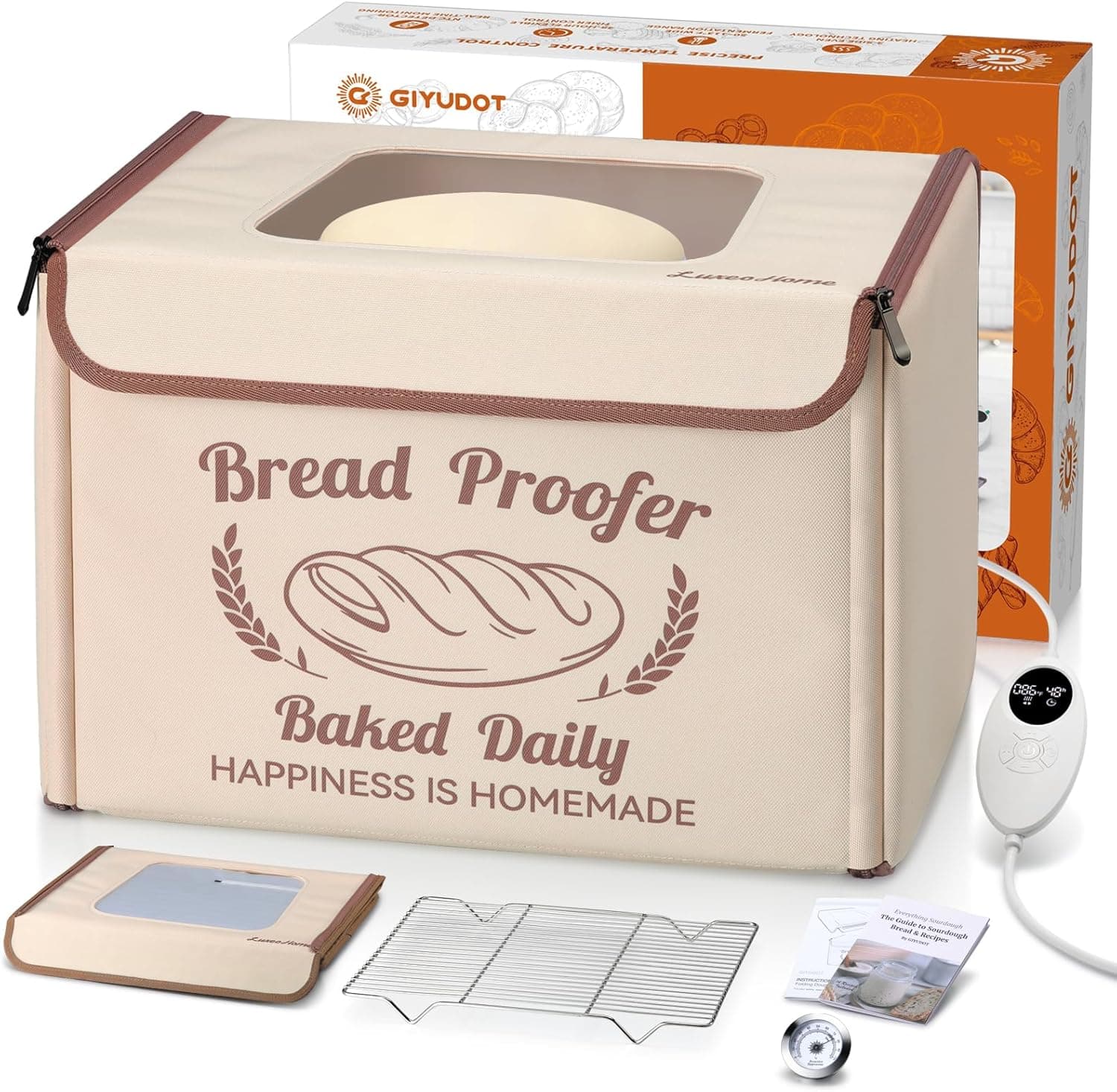
+ Recipes are included, which helps new users learn proofing times
From our guide: Best Bread Proofing Boxes
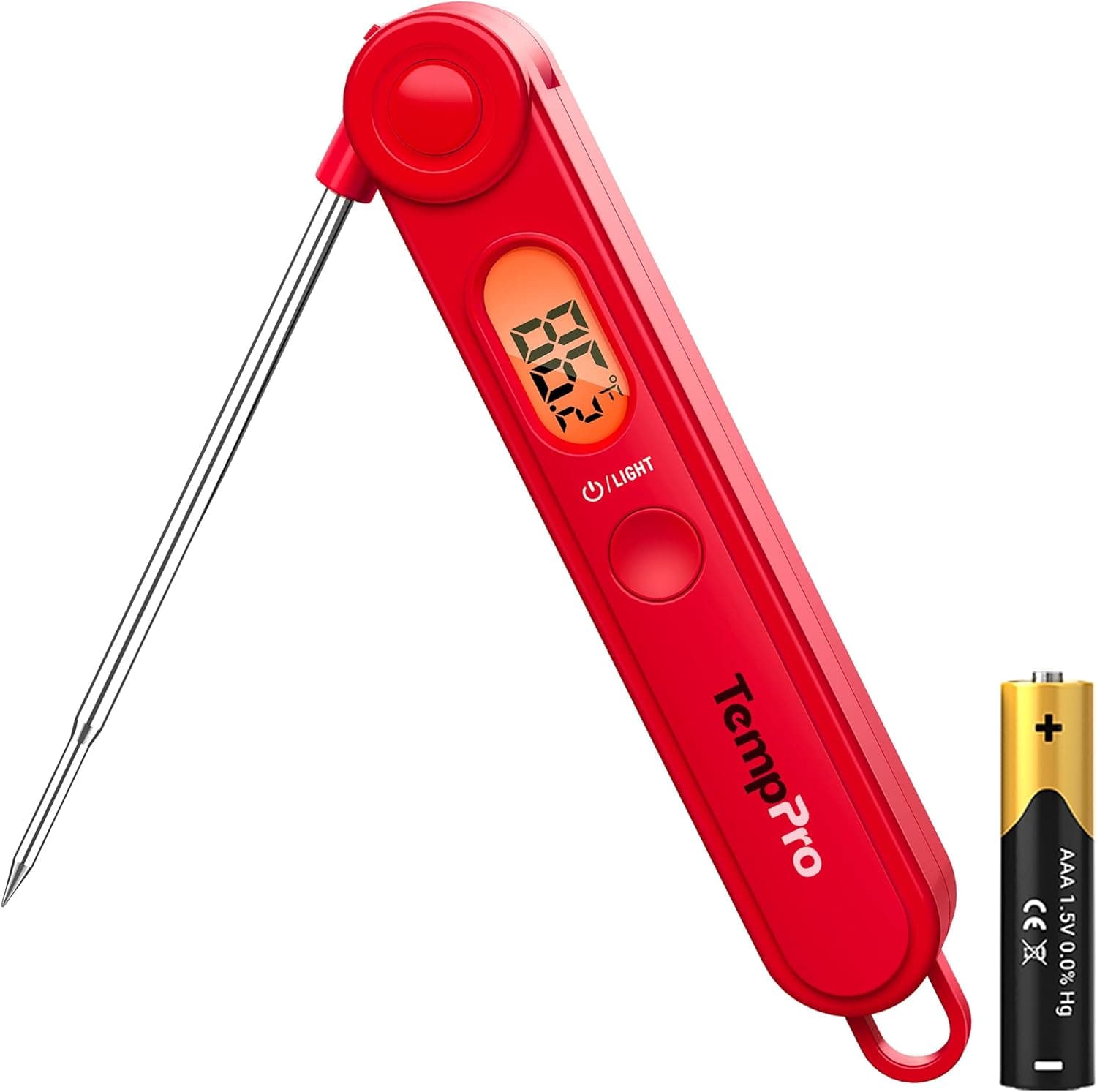
+ Backlight makes readings clear in a dim oven or evening kitchen
From our guide: Best Kitchen Thermometers
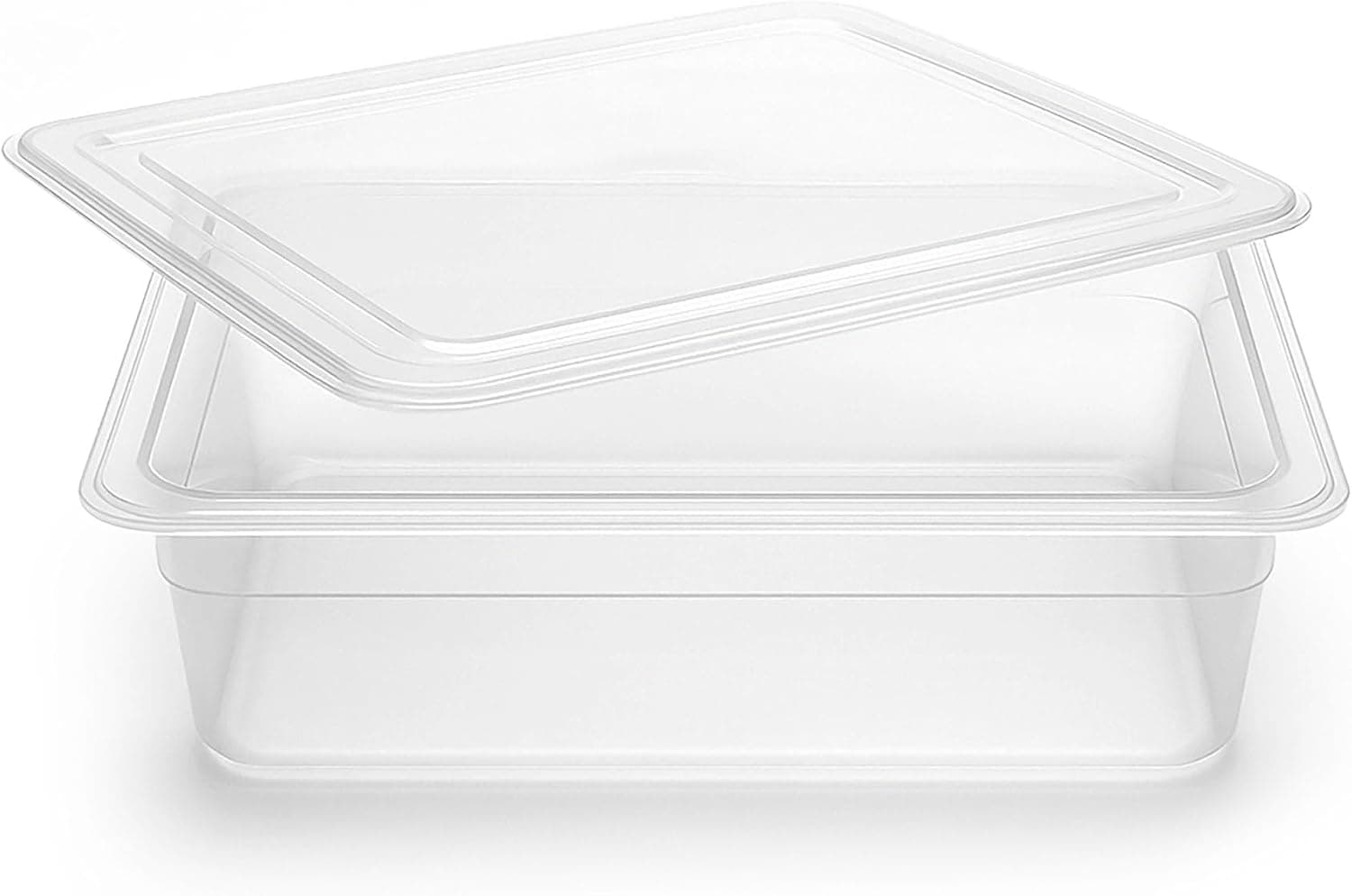
+ Fits up to 3000 grams of dough, which covers large sourdough batches
From our guide: Best Dough Proofing Containers
Popular right now
- Banneton vs Bowl ProofingArticle
- Best Baking Stones for BreadBuying guide
- Sourdough Baking ScheduleArticle
- Best Dough ScrapersBuying guide
- How to Stop Sourdough Dough Sticking to the Proofing BasketArticle
- Why Your Sourdough Dough Is Too Sticky to ShapeArticle
Based on the last 28 days of search and visitor data.