Sourdough Troubleshooting
Published How we research

Every sourdough baker runs into problems, and even experienced bakers pull the occasional disappointing loaf from the oven. The encouraging truth is that almost every issue has a clear cause once you know what to look for. Rather than feeling discouraged, treat a flawed loaf as a puzzle. By reading the clues in the crumb, the crust, and the rise, you can trace most problems back to one of a handful of familiar culprits.
Products from this article
The highest-scoring picks from the buying guides this article links to. Scores are our editorial assessment, not customer ratings.
+ Measurement markings and height marker make tracking rise easy
From our guide: Best Glass Starter Jars
+ Board surface holds a dusting of flour so dough slides off smoothly
From our guide: The 7 Best Baker Peels for Sourdough in 2026 (Wood vs Metal)
+ Conveyor-style design deposits sticky dough without it clinging to the peel
From our guide: The 6 Best Bread Transfer Peels for Sourdough Bakers (2026)
+ 8oz airtight jar stores a backup starter or discard
From our guide: Best Glass Starter Jars



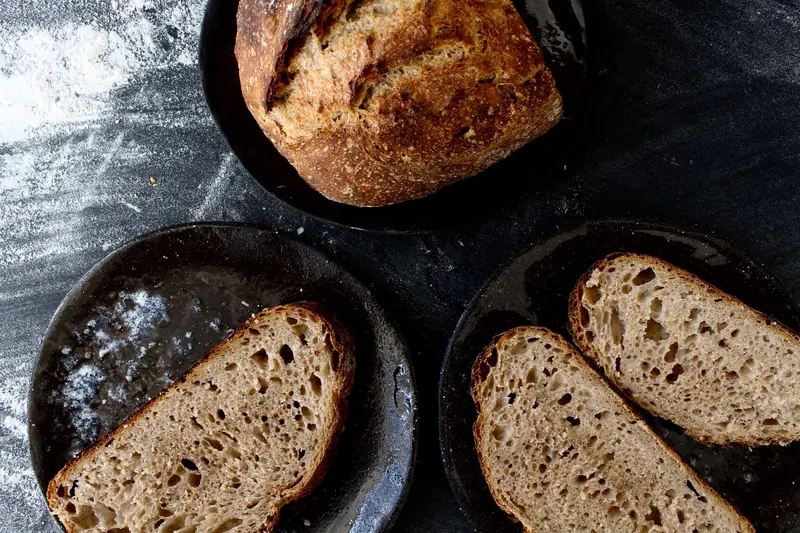
A dense, tight crumb with little rise is one of the most common complaints, and it usually points to an underactive starter or under fermentation. If your starter was not bubbly and vigorous when you mixed the dough, it simply did not have the power to leaven the loaf. Make sure your starter reliably doubles after feeding before you bake with it, and give your bulk fermentation enough time for the dough to grow noticeably puffy. Cold kitchen temperatures slow everything down, so a chilly room often needs longer fermentation than a recipe suggests.
A loaf that spreads flat instead of rising tall usually signals either overproofing or weak shaping. When dough ferments too long, the gluten structure breaks down and can no longer hold its shape, so the loaf pancakes in the oven. Watch for a dough that has grown very slack, wobbly, and full of large bubbles as a sign you have gone too far. If fermentation looks fine, the issue may be shaping, so focus on building more surface tension so the loaf holds its form.
A gummy or gluey interior can be alarming, but it often comes down to slicing too soon. A hot loaf is still finishing its cooking as it cools, and cutting into it early releases steam and leaves the crumb pasty. Let your bread cool completely, ideally for at least a couple of hours, before slicing. If the crumb is still gummy after proper cooling, the loaf may be underbaked, so extend your bake time or check that your oven runs at the temperature it claims.
Large tunnels or a big hole under the top crust, sometimes with a dense band at the bottom, usually reflect a shaping or degassing issue rather than fermentation. Uneven distribution of gas often happens when the dough is not shaped tightly or when trapped pockets are not redistributed during shaping. Handling the dough a bit more firmly during the final shape and making sure it is proofed properly will help even out the crumb.
When you hit a problem, change one variable at a time and keep simple notes on what you did. It is tempting to overhaul your whole process after a bad loaf, but that makes it impossible to know what actually helped. Track your starter activity, room temperature, fermentation time, and hydration, and adjust just one factor per bake. Sourdough is a conversation between you and a living culture, and patient, methodical troubleshooting is how you learn its language.
Popular right now
- Banneton vs Bowl ProofingArticle
- Best Baking Stones for BreadBuying guide
- The 6 Best Silicone Baking Mats for Bread and Sourdough (2026)Buying guide
- Why Your Sourdough Dough Is Too Sticky to ShapeArticle
- The 7 Best Flour Storage Containers for Home Bakers (2026)Buying guide
- Best Sourdough Starter JarsBuying guide
Based on the last 28 days of search and visitor data.