What Kind of Jar for Sourdough Starter: Size, Material, Mouth and Lid
Published How we research
Use a clear glass jar with a wide mouth, straight sides and a loose-fitting lid, sized so your freshly fed starter fills no more than a third of it. For most home bakers that means a 16 oz (pint) or 32 oz (quart) wide-mouth jar. Clear glass lets you see the rise and the bubble structure, a wide mouth lets you stir and scrape without mess, and the headroom keeps an active starter from climbing over the rim. The sections below cover sizing by starter amount, materials, mouth width, lids and the small details that make daily feeding easier.
Products from this article
The highest-scoring picks from the buying guides this article links to. Scores are our editorial assessment, not customer ratings.
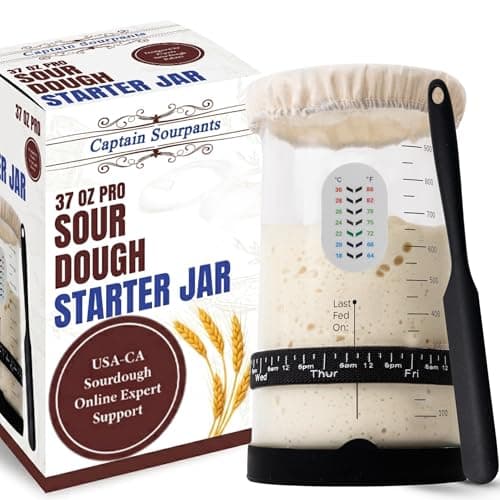
+ Silicone scraper keeps jar sides clean for accurate rise tracking
From our guide: Best Sourdough Starter Jars
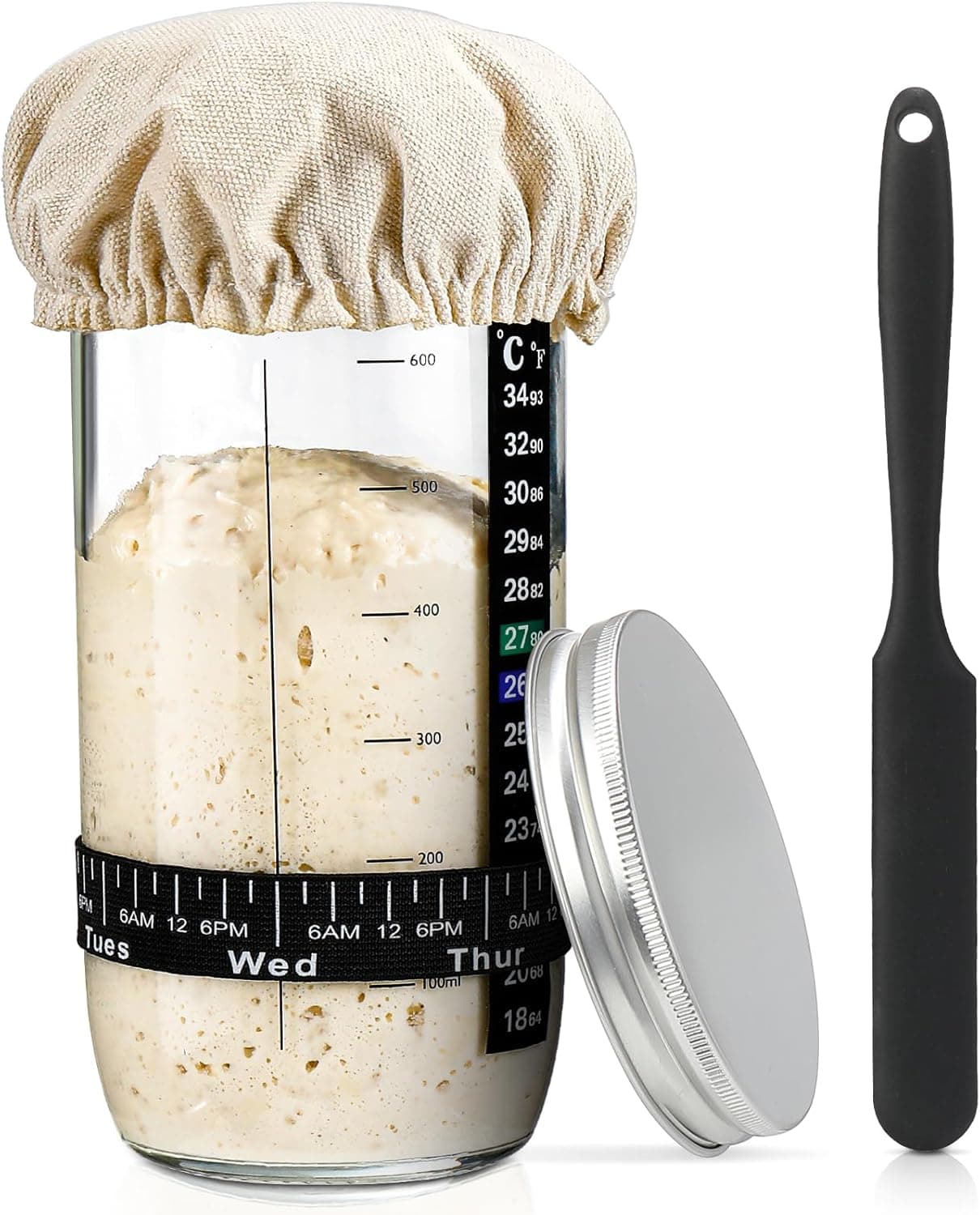
+ Measurement markings and height marker make tracking rise easy
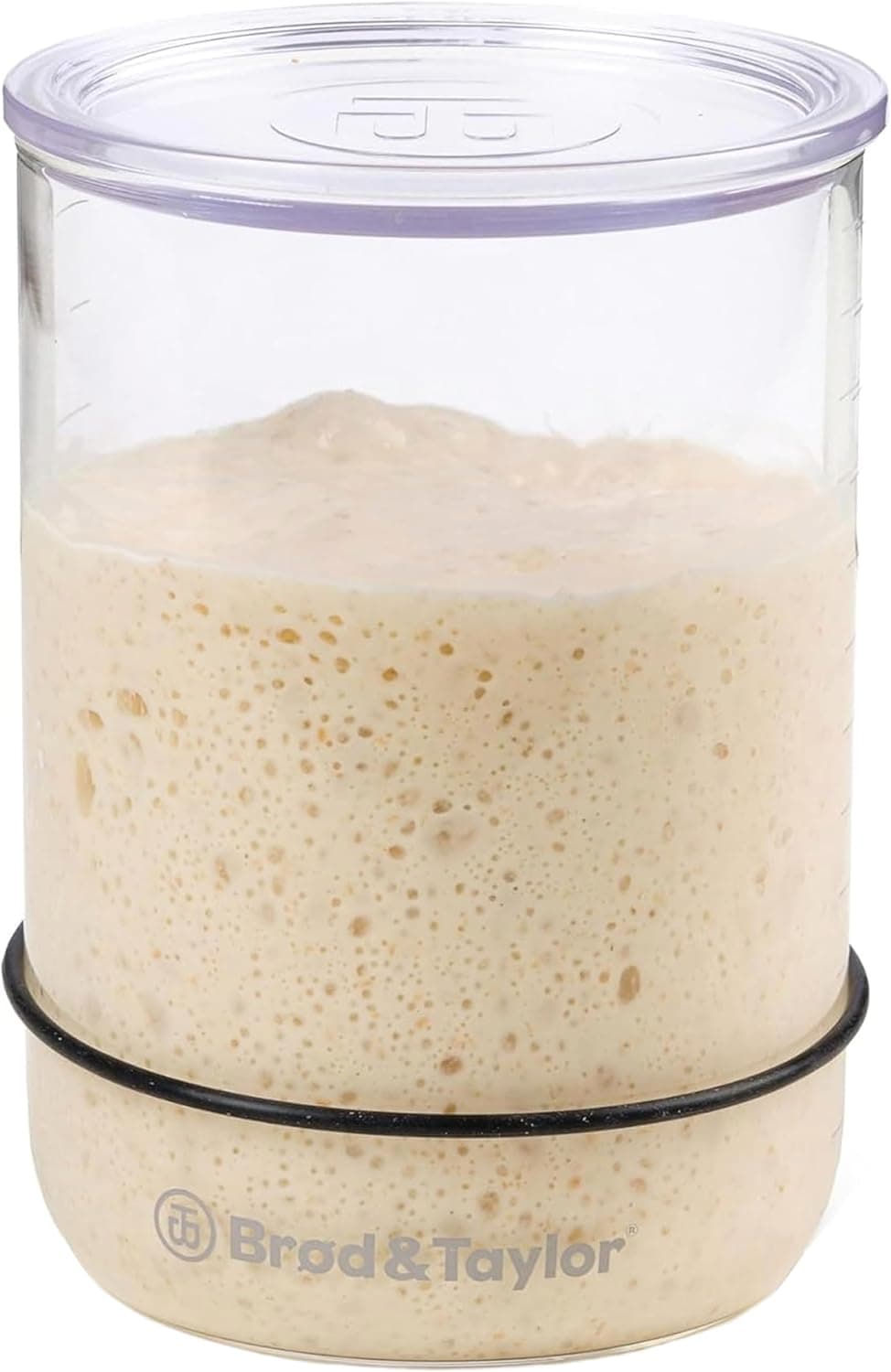
From our guide: Best Glass Starter Jars
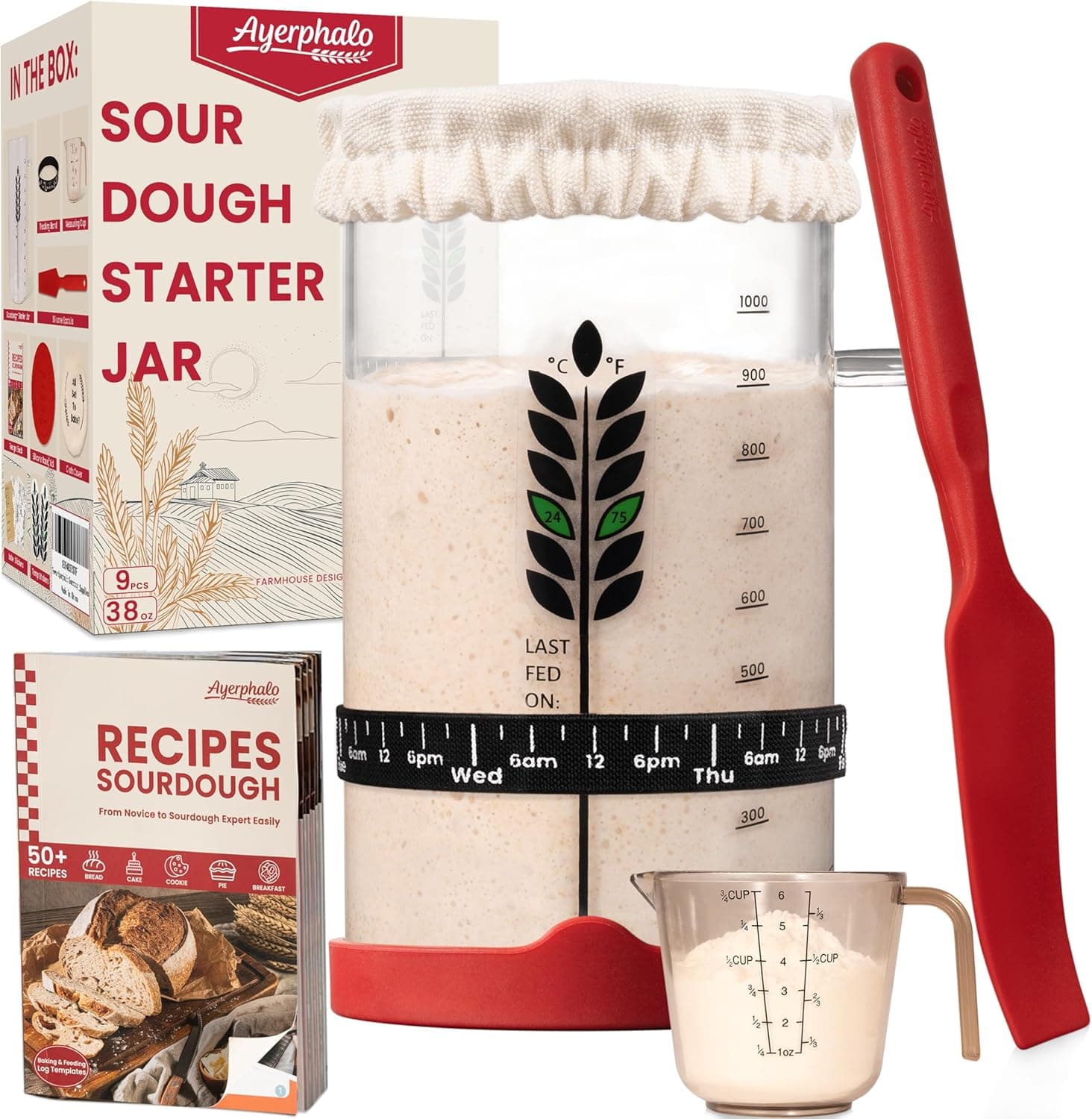
+ Cookbook provides recipes for using the starter beyond basic loaves
From our guide: Best Starter Jar Kits
+ Percentage weighing supports baker's percentages for hydration and salt
From our guide: Best Digital Baking Scales

How big a jar does a sourdough starter need?
Size the jar to the starter you keep after feeding, not to the starter you discard. A healthy starter usually doubles and can triple at its peak, so the fed starter should take up a third of the jar or less. Starter is close to the density of water, so 100 g of fed starter is roughly 100 ml, or about 3.5 fl oz.
Common mason jar sizes and what they hold comfortably: an 8 oz half-pint jar suits about 50 to 75 g of fed starter, which works for a small maintenance starter fed at 1:1:1 with 20 to 25 g each of starter, flour and water. A 16 oz pint jar suits about 100 to 150 g of fed starter, the most common home routine. A 32 oz quart jar suits about 200 to 300 g, enough when you build levain for two loaves straight from the jar. A 64 oz half-gallon jar only makes sense if you bake several loaves a day or keep a large stiff starter.
If you are unsure, start with a pint and keep a quart on hand for the days you build extra. A jar that is too large is not harmful, but a thin layer of starter in a big jar dries on the walls and makes it harder to judge the rise.
Glass, plastic or ceramic: which material works best
Glass is the standard choice. It is nonreactive with acidic starter, does not hold odors, survives a dishwasher and, most importantly, lets you see the bubbles, the rise line and any liquid (hooch) collecting on top. Reading the jar from the side is how most bakers decide when a starter is ready to use.
Food-grade plastic deli containers are light, cheap, stackable and do not shatter, which is why many bakeries use them. The trade-offs are that plastic scratches over time, the scratches hold residue, and cloudy plastic makes the rise harder to read. If you use plastic, pick containers labeled food safe and replace them once they are scratched or stained.
Glazed ceramic crocks look good on a counter and hold temperature a little more steadily, but you cannot see through them, so you judge readiness by the top surface and smell alone. Avoid storing starter in reactive metals such as aluminum or copper, since the acid in an active starter can react with them. Stainless steel is fine for mixing bowls and spoons.
Wide mouth vs regular mouth, and why straight sides matter
Standard US mason jars come in two openings: regular mouth at about 2 3/4 inches (70 mm) and wide mouth at about 3 3/8 inches (86 mm). For a starter, the wide mouth wins. You can stir with a spatula, scrape the walls in one pass, pour flour in without spilling and reach the bottom with a spoon when you clean it.
Straight sides matter almost as much as the opening. Jars with a narrow shoulder trap dried starter under the neck, where it is hard to reach, and the shoulder hides the top of the rise. A straight-sided jar lets you put a rubber band or a strip of tape at the level right after feeding, so you can see at a glance whether the starter has doubled.
A flexible silicone or plastic bowl scraper that fits through the mouth makes the daily routine much cleaner. Use it to push the starter down, wipe the walls above the starter line and pull every bit out when you build a levain.
Which lid to use: loose, vented or sealed
A starter makes carbon dioxide as it ferments, so the lid should let gas out. A loosely screwed metal or plastic mason lid, a lid set on top without being tightened, a coffee filter or cloth held with a band, or a purpose-made vented lid all work. The goal is to keep out dust, fruit flies and drying air while letting pressure escape.
Clamp-top jars with a rubber gasket are popular because they look tidy, but a tightly sealed gasket can build pressure with a very active starter. Many bakers remove the gasket or leave the clamp open and just rest the lid on top. Screw-on lids should be turned only until they sit in place, not tightened down.
For a starter stored in the fridge between bakes, a looser fit matters less because fermentation slows a lot at fridge temperature, but leave the lid slightly loose anyway. If you see liquid on top after several days in the fridge, that is normal hooch from a hungry starter: pour it off or stir it in, then feed.
Useful extras: bands, scales and a second jar
A rubber band, a dry-erase marker or a printed volume scale on the jar is the simplest way to track rise. Mark the level right after feeding and note the time. Most starter jar kits include a band and sometimes a thermometer strip, which is handy if your kitchen temperature swings.
A digital scale that reads in 1 g steps is the most useful companion to the jar. Weighing flour and water gives you repeatable feedings, especially with small amounts like 20 g where a spoon measure can be off by a lot. Put the empty jar on the scale, tare it, and add starter, flour and water in turn.
Keep two jars in rotation. Starter dries into a crust on the walls over a few days, and that crust can flake back into the culture. Every week or so, feed the starter into a clean jar and wash the old one with hot water; soaking first helps, since dried starter sets like glue.
Quick checklist for choosing a starter jar
Choose clear glass so you can read the rise. Pick a wide mouth, about 3 3/8 inches on a mason jar, so you can stir and scrape. Prefer straight sides with no narrow shoulder. Size the jar so fed starter fills a third or less: a pint for 100 to 150 g, a quart for 200 to 300 g. Use a lid that lets gas out, and keep a second jar so you can swap to a clean one regularly.
If you are buying everything at once, a starter jar kit bundles the jar, a band and often a small spatula, which covers the basics. If you already own mason jars, a wide-mouth pint plus a vented lid does the same job for very little money.
Frequently asked questions
Can I keep sourdough starter in a mason jar? Yes. A wide-mouth mason jar is one of the most common starter containers. Use a pint or quart depending on how much you keep, and leave the lid loosely screwed on so gas can escape.
Should a sourdough starter jar be airtight? No. The starter releases carbon dioxide, so a fully sealed jar can build pressure. Cover it to keep out dust and insects, but let air and gas pass, with a loose lid, a vented lid or a cloth cover.
What size jar do I need for a beginner starter? A 16 oz wide-mouth pint jar is enough for the usual beginner routine of about 50 g starter fed with 50 g flour and 50 g water. That 150 g of fed starter has room to double or more without spilling over.
How often should I change the jar? Move the starter to a clean jar when dried starter builds up on the walls, which for most bakers is about once a week with daily feeding. Wash the old jar with hot water after a soak.
Popular right now
- Banneton vs Bowl ProofingArticle
- Best Baking Stones for BreadBuying guide
- The 6 Best Silicone Baking Mats for Bread and Sourdough (2026)Buying guide
- Why Your Sourdough Dough Is Too Sticky to ShapeArticle
- The 7 Best Flour Storage Containers for Home Bakers (2026)Buying guide
- Best Sourdough Starter JarsBuying guide
Based on the last 28 days of search and visitor data.