Autolyse and Bulk Fermentation
Published How we research
Two of the most important stages in a sourdough recipe happen before the loaf ever gets shaped: the autolyse and the bulk fermentation. Both are easy to perform mechanically but easy to misjudge, and getting a feel for them is what separates flat, dense bread from an open, airy crumb. Understanding what each stage is doing helps you read your dough instead of blindly following the clock.
Products from this article
The highest-scoring picks from the buying guides this article links to. Scores are our editorial assessment, not customer ratings.
+ Explains the science behind fermentation, so you understand why each step matters
From our guide: Best Sourdough Recipe Books
+ Food-grade Swiss spear electrode made for solid and semi-solid samples, and it can be replaced when it wears out.
From our guide: Best pH Meters For Sourdough
+ Backlight makes readings clear in a dim oven or evening kitchen
From our guide: Best Kitchen Thermometers
+ Classic country loaf method has shaped how many home bakers make sourdough
From our guide: Best Sourdough Recipe Books


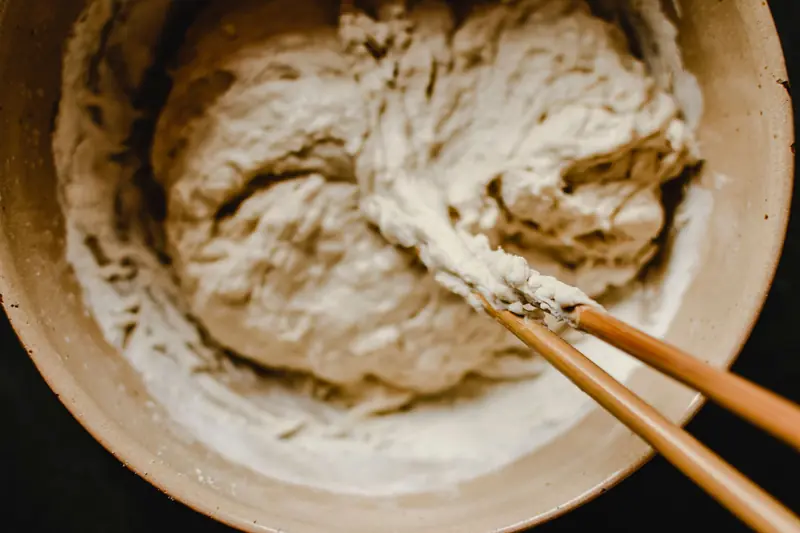
The autolyse is simply a rest period where you mix only flour and water and let them sit, usually for 30 minutes to a couple of hours, before adding your starter and salt. During this rest the flour fully hydrates and enzymes begin breaking starches into simpler sugars while gluten strands start to organize on their own. The payoff is a dough that becomes smooth and extensible with far less kneading, which means better structure for less effort. You will notice the dough transform from shaggy and rough to silky and stretchy during this quiet rest.
After the autolyse you add the starter and salt and mix them in thoroughly. Salt is usually held back from the autolyse because it tightens gluten and slows enzyme activity, so adding it afterward lets the flour hydrate freely first. Once everything is combined, the bulk fermentation begins. This is the long first rise where the wild yeast produces carbon dioxide to inflate the dough and the bacteria develop flavor and acidity.
Bulk fermentation is where patience and observation matter most. Rather than watching the clock, watch the dough. You are looking for it to increase in volume by roughly 30 to 75 percent depending on the recipe, to feel airy and jiggly, and to show some bubbles at the surface and edges of the container. A straight-sided vessel makes it much easier to gauge the rise. Temperature dramatically changes the timing here: a warm dough might finish bulk in three to four hours, while a cool one could take six or more.
During bulk you typically perform a series of stretches and folds instead of traditional kneading. Every 30 to 45 minutes for the first couple of hours, wet your hand, grab one side of the dough, stretch it up, and fold it over the center, rotating the bowl until you have done all four sides. These gentle folds build strength and even out the temperature and fermentation without knocking out the gas you have worked to create. As the dough matures it will feel puffier and hold its shape better with each set.
The most common mistakes are ending bulk too early, which gives a tight, dense loaf, or letting it run too long, which produces a slack, sticky dough that spreads flat and tastes overly sour. Aim to shape while the dough still has some spring and life in it. With practice you will start to trust your hands: a properly bulked dough feels alive, holds air, and releases cleanly from the container. Once you can read those signs, the timer becomes a rough guide rather than a rule.
Popular right now
- Banneton vs Bowl ProofingArticle
- Best Baking Stones for BreadBuying guide
- The 6 Best Silicone Baking Mats for Bread and Sourdough (2026)Buying guide
- Why Your Sourdough Dough Is Too Sticky to ShapeArticle
- The 7 Best Flour Storage Containers for Home Bakers (2026)Buying guide
- Best Sourdough Starter JarsBuying guide
Based on the last 28 days of search and visitor data.